Choosing the right DSP can make a center channel sound focused instead of harsh, thin, or disconnected. The best car audio processors for center channels help you align timing, shape EQ, and blend the center speaker into the front stage.
Below, you’ll find 10 strong options for buyers who want more control over imaging, crossovers, and system tuning without overcomplicating the setup.
Best 10 Car Audio Processors for Center Channels Picks for 2026
Premium 8-Channel DSP Tuning
Banda Audiopart X8AiR 8-Channel DSP Car Audio Processor
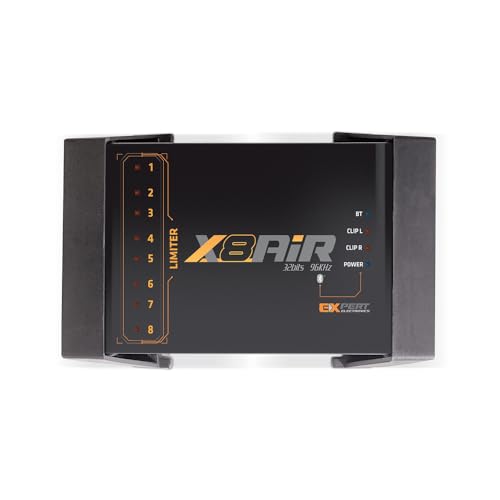
- 32-bit/96kHz DSP for precise tuning
- 79-band EQ with crossover, time alignment, and phase control
- Bluetooth app control plus 4-in/8-out routing
Best For: Detailed tuning for complex factory or aftermarket systems
Pro Sequencer Crossover DSP
Stetsom STX 2848 PRO 8-Channel Processor

- 8 independent outputs for multi-channel setups
- 15-band EQ with variable crossover slopes
- Limiter, sequencer, and LCD interface
Best For: Installations needing structured output control and sequencer features
Compact Bluetooth DSP Control
Timpano TPT-SP4BT 4-Output DSP Processor

- Bluetooth control from Android or iOS
- Real-time EQ, crossover, alignment, and limiter adjustments
- Built-in voltmeter and signal test tools
Best For: Compact installs that need phone-based tuning and setup tools
Flexible Preset DSP Crossover
Taramp's Pro 2.4S 4-Channel DSP Processor

- 15-band EQ with up to 12 dB adjustment
- 12 preset EQ curves including VOCAL and COMPETITION
- 2-in/4-out layout with wide crossover settings
Best For: Drivers who want preset EQ options and flexible crossover tuning
Bluetooth App Control
Bluetooth App DSP with Flexible Routing

- Bluetooth app tuning from your phone
- RCA and high-level input support
- Delay, limiter, and crossover controls
Best For: Compact systems that need wireless tuning and flexible integration
8-Channel Flexibility
8-Channel Crossover with Sequencer
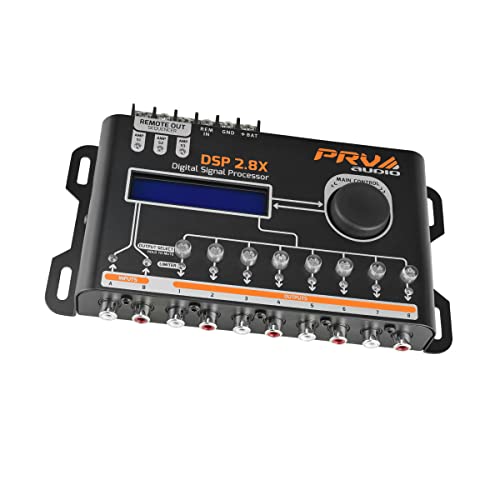
- 8 outputs with flexible A/B source routing
- 15-band EQ plus 12 presets
- Sequencer trigger support for integration
Best For: Multi-speaker setups that need flexible routing and more outputs
Compact App Tuning
Bluetooth DSP PRO with Graphic EQ

- Android and iOS app control
- 12-band graphic equalizer
- RCA and high-input compatibility
Best For: Compact systems that need easy app-based tuning and factory input support
Compact Tuning Pick
PRV AUDIO DSP 2.4X Digital Crossover

- 2 inputs and 4 independent outputs
- 15-band EQ with 12 presets
- Sequencer remote relay support
Best For: easy crossover tuning and basic DSP control
App-Controlled Upgrade
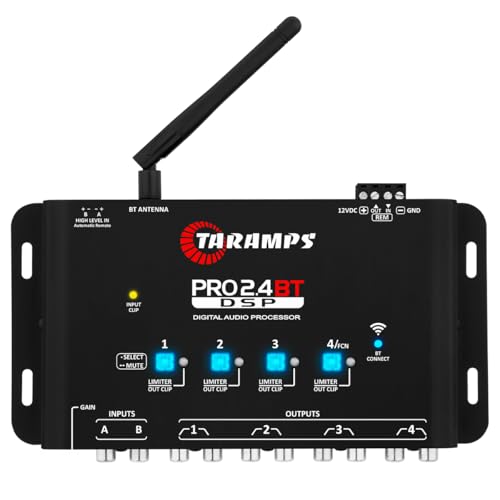
- Bluetooth 5.4 BLE app tuning
- 24-bit / 48kHz processing
- High-level input with auto turn-on
Best For: detailed tuning and OEM system integration
OEM-Friendly Choice

- Bluetooth app control and LCD interface
- High-level input for factory radios
- PRV preset crossovers for speakers and tweeters
Best For: OEM-friendly upgrades with easy wireless tuning
Premium 8-Channel DSP Tuning – Banda Audiopart X8AiR 8-Channel DSP Car Audio Processor
If you’re comparing car audio processors for center channels and other multi-speaker setups, the Banda Audiopart X8AiR is built for detailed tuning. Its 32-bit/96kHz DSP, 79-band equalizer, and flexible 4-in/8-out layout make it a strong fit when you want cleaner control over highs, mids, bass, and crossover behavior.
Best For: Drivers who want a feature-rich DSP for complex factory or aftermarket systems with app-based tuning.
Pros:
- 32-bit/96kHz DSP supports precise multi-channel tuning and reduced distortion.
- 79 EQ bands per channel plus crossover, time alignment, phase control, and peak limiter.
- Bluetooth and app control let you adjust EQ, crossover, limiter, and gains from your phone.
- 4 inputs and 8 outputs suit component speakers, subwoofers, and multi-amplifier setups.
Cons:
- Best suited to users comfortable with detailed DSP setup.
- Advanced feature set may be more than needed for simple systems.
Overall, the X8AiR stands out for users who want full-system control and highly adjustable tuning in one processor. It’s especially appealing when you need flexible routing and real-time mobile adjustments.
Pro Sequencer Crossover DSP – Stetsom STX 2848 PRO 8-Channel Processor
The Stetsom STX 2848 PRO is a practical pick among car audio processors for center channels and full-system signal management. It combines 8 independent outputs, dual RCA inputs, crossover controls, limiter functions, and a graphic equalizer, making it useful when you need structured tuning and output management in one unit.
Best For: Installations that need a straightforward digital processor with sequencer and multi-output control.
Pros:
- 8 independent outputs support multi-channel system building.
- 15-band graphic equalizer and professional equalization adjustments help shape sound.
- Variable crossover settings cover multiple slope options from 12 to 48 dB/8ª.
- Limiter with dynamic attack-release system adds protection and control.
Cons:
- Uses a more traditional LCD interface rather than app-based control.
- Dual RCA inputs may feel limited for some larger signal-routing needs.
The STX 2848 PRO focuses on core DSP features that matter in a serious install: outputs, crossover flexibility, and limiter control. It’s a solid choice if you want digital processing without extra app-driven complexity.
Compact Bluetooth DSP Control – Timpano TPT-SP4BT 4-Output DSP Processor
The Timpano TPT-SP4BT is a compact option for car audio processors for center channels, factory radios, and smaller custom systems. Bluetooth control from a phone or tablet, real-time EQ and crossover adjustment, and built-in tools like a voltmeter and signal generators make it a versatile tuning device in a small package.
Best For: Users who want app-based DSP tuning in a compact processor with extra diagnostic tools.
Pros:
- Bluetooth app control works with Android and iOS devices.
- Real-time adjustments include EQ, crossover filters, alignment, gain, phase inversion, and limiter.
- Built-in voltmeter, frequency generator, frequency sweep, and pink noise help with setup and testing.
- Sequencer feature can trigger up to three products through remote startup connections.
Cons:
- 4 output channels are less expansive than larger multi-output processors.
- Best for users who prefer tuning through a phone or tablet.
For compact installs, the TPT-SP4BT gives you useful DSP control without taking much space. Its diagnostic features also make it especially handy during installation and system checking.
Flexible Preset DSP Crossover – Taramp's Pro 2.4S 4-Channel DSP Processor
Taramp’s Pro 2.4S fits well in car audio processors for center channels when you want flexible equalization and crossover options in a 2-in/4-out layout. It offers 15-band EQ, preset sound curves, and filter choices that let you shape the output for different listening goals and system layouts.
Best For: Drivers who want configurable DSP tuning with presets and broad crossover flexibility.
Pros:
- 15-band equalizer with up to 12 dB boost/attenuation.
- 12 preset EQ options including FLAT, LOUDNESS, BASS BOOST, VOCAL, and COMPETITION.
- Adjustable HPF and LPF crossover settings from 10 Hz to 22 kHz with multiple filter types.
- 2-channel input and 4-channel output design suits compact system builds.
Cons:
- Wired DSP layout may be less convenient than Bluetooth-controlled options.
- Most useful for users who want to spend time fine-tuning presets and filters.
The Pro 2.4S offers a lot of tuning range for a relatively simple channel layout. It’s a practical choice if you want preset support plus enough crossover control to tailor a system carefully.
Bluetooth App Control – Bluetooth App DSP with Flexible Routing
If you want car audio processors for center channels with app-based control, the LOWDR LDX 2.4 gives you a compact way to tune timing, crossover settings, EQ, and limiting from your phone. It accepts RCA and high-level inputs, so it can fit both aftermarket and factory-style systems while still offering detailed channel control.
Best For: Drivers who want a compact DSP with Bluetooth app tuning, flexible input options, and protection features for a small to mid-size system.
Pros:
- Bluetooth app control for wireless DSP adjustments
- Parametric EQ, crossover, and limiter controls for system tuning
- RCA and high-level inputs with flexible routing
- Delay adjustment, auto save/load, and sequencer functions
Cons:
- 4 output channels may be limiting for larger builds
- Requires a smartphone for app-based tuning
Overall, this is a practical pick if you want straightforward DSP tuning without a bulky setup. The feature set is geared toward clean integration and control, rather than maximum channel count.
8-Channel Flexibility – 8-Channel Crossover with Sequencer
For shoppers comparing car audio processors for center channels and multi-speaker layouts, the PRV AUDIO DSP 2.8X stands out for its 8 independent outputs and source routing options. It includes graphic EQ presets, parametric adjustment, and sequencer support, making it a strong fit when you need more output flexibility from a single processor.
Best For: System builders who need an 8-channel DSP with source routing, preset EQ options, and remote sequencing support.
Pros:
- 8 channel crossover with 2 audio inputs and flexible A/B routing
- 15-band graphic EQ plus 12 built-in presets
- Parametric EQ with gain, frequency, and bandwidth control
- Sequencer remote trigger connection for system integration
Cons:
- Interface is LCD-based rather than app-first
- More advanced routing may take extra setup time
The DSP 2.8X is aimed at users who want more channels and more routing choices than a basic processor provides. If you value output flexibility and onboard tuning tools, it is easy to see the appeal.
Compact App Tuning – Bluetooth DSP PRO with Graphic EQ
The Stetsom STX 2436 is a compact choice among car audio processors for center channels if you want Bluetooth tuning and simple on-device protection. It supports Android and iOS app control, high and RCA inputs, and a 12-band graphic equalizer for dialing in the system from a phone or tablet.
Best For: Users who want a compact Bluetooth DSP with app support, factory-radio input compatibility, and easy sound shaping.
Pros:
- Bluetooth app support for Android and Apple devices
- 12-band graphic equalizer with customizable sound adjustments
- RCA and high input support for factory stereo integration
- 6-digit password protection for setup security
Cons:
- Focused on graphic EQ rather than deeper multi-band processing
- Bluetooth range is limited to an unobstructed area
This model makes sense for users who want a compact DSP with straightforward app control and factory integration. It is less about sheer channel count and more about accessible tuning in a small package.
Compact Tuning Pick – PRV AUDIO DSP 2.4X Digital Crossover
If you want car audio processors for center channels with straightforward tuning, the PRV AUDIO DSP 2.4X is a practical fit for clean crossover and EQ control. It offers 2 inputs, 4 independent outputs, and real-time adjustments through an LCD interface, making it easier to dial in a focused setup without unnecessary complexity.
Best For: drivers who want an easy-to-use DSP for crossover tuning, equalization, and sequenced system control.
Pros:
- 2 inputs with 4 independent outputs for flexible routing
- 15-band graphic EQ plus 12 preset EQ options
- Parametric input/output EQ for finer adjustments
- Sequencer remote relay support for triggering other gear
Cons:
- No Bluetooth app control listed in the supplied notes
- Fewer advanced processing features than some app-based DSPs
This model suits buyers who value hands-on control and a compact signal processor with useful crossover and EQ tools. It is a solid option when you need straightforward tuning support rather than a feature-heavy platform.
App-Controlled Upgrade – Taramps Pro 2.4 BT DSP
For car audio processors for center channels that prioritize modern control, the Taramps Pro 2.4 BT stands out with Bluetooth 5.4 BLE app tuning and a full set of processing tools. It combines 2 inputs and 4 outputs with crossover filters, delay, phase inversion, and limiter control, so it is built for users who want precise system shaping from a phone or tablet.
Best For: app-based tuning, OEM integration, and users who want more detailed digital processing.
Pros:
- Bluetooth app control with real-time adjustments
- 24-bit / 48kHz processing with 15-band graphic EQ
- High-level input with auto turn-on for factory head units
- Per-channel delay, phase inversion, and limiter functions
Cons:
- More complex than a basic crossover-only processor
- App-based setup may be more than casual users need
This is the most feature-rich choice in the group, especially if you want smartphone tuning and solid factory-radio compatibility. It fits builds where detailed control matters more than simplicity.
OEM-Friendly Choice – PRV AUDIO 2.4X BT DSP
If you are comparing car audio processors for center channels and need easy factory-system integration, the PRV AUDIO 2.4X BT is built for that job. It adds Bluetooth app control, high-level speaker input, and 4-channel output control with independent gain, crossover, and parametric EQ settings, giving you flexible tuning without replacing the head unit.
Best For: factory-radio upgrades, Bluetooth tuning, and users who want PRV crossover presets.
Pros:
- Bluetooth app control plus LCD-based interface
- High-level input for OEM infotainment systems
- 4 outputs with independent gain, crossover, and parametric EQ
- Includes PRV crossover presets for speakers, drivers, and tweeters
Cons:
- Less processing depth than the Taramps model on paper
- Only 4 channels, so it is not aimed at larger multi-amplifier setups
This version makes setup easier when you are working with a factory head unit and want quick access to tuning from a smartphone. It is a sensible middle-ground option for users who want modern convenience with built-in integration tools.
How We Picked the Best Car Audio Processors for Center Channels
We focused on features that matter most for center-channel integration: enough output channels, flexible crossover control, usable EQ tools, and tuning options that help the center speaker match the left and right fronts. App control, Bluetooth, sequencers, and remote relay features also matter because they can make installation and adjustment easier.
Quick Comparison
In general, the 8-channel units suit more complex builds, while 4-output processors work better for simpler systems or dedicated front-stage setups. If you want maximum tuning flexibility, look for higher-resolution EQ, broad crossover ranges, and strong app-based control. If you want a straightforward path to better sound, a simpler processor with solid preset support may be enough.
Key Buying Factors for Car Audio Processors for Center Channels
Channel Count and Routing
A center channel usually benefits from independent control, so verify that the processor can assign outputs the way your system needs. More channels mean more flexibility for active front stages, sub integration, and time alignment.
EQ and Crossover Tools
Parametric EQ offers more precision, while graphic EQ can be faster for basic tuning. For center speakers, crossover control is critical because the wrong frequency range can make vocals sound aggressive or cause localization problems.
Time Alignment and Level Matching
The center speaker should reinforce the front image, not pull it upward. Proper delay and output level control help keep vocals anchored and balanced across the dash.
Input and Control Options
Bluetooth app control, sequencers, and remote relay functions can simplify tuning and power management. These are especially useful if the DSP will be adjusted often or installed in a hidden location.
Who Should Buy Which Car Audio Processors for Center Channels?
If you’re building a flexible SQ-focused system, choose a higher-channel processor with detailed EQ and crossover control. If you want a simpler daily-driver upgrade, a compact 4-output DSP may be enough for a center-channel-friendly front stage. For installers and enthusiasts who tune often, app control and stronger adjustment precision are worth prioritizing.
For most shoppers, the best Car Audio Processors for Center Channels are the ones that make it easy to blend the center speaker naturally with the rest of the front soundstage. Focus on routing flexibility, tuning depth, and clean integration rather than features you won’t use.