Choosing the right processor can make a huge difference in how your system sounds, especially when you want cleaner signal handling and easier tuning. For drivers building a more refined setup, the best car audio processors with optical input can simplify integration while preserving detail.
This roundup focuses on practical picks for everyday upgrades, factory-system fixes, and higher-end builds. Whether you need bass control, full DSP tuning, or plug-and-play flexibility, the goal is to help you narrow down the right match fast.
Best 10 Car Audio Processors with Optical Input Picks for 2026
Optical DSP Pick
Optical-ready 8-channel DSP with PC control

- Optical and AUX input selection
- High-level and low-level inputs
- Multiple preamp outputs plus USB PC control
Best For: Systems that need optical input and flexible DSP tuning
Compact EQ Choice
Half-DIN EQ with front AUX and sub control

- Seven-band EQ with ±12 dB adjustment
- High-level, low-level, and front AUX inputs
- Dedicated subwoofer level control and LPF
Best For: Compact installs that need easy EQ and sub adjustment
Multi-Channel DSP Upgrade
10-channel processor with optical SPDIF

- Optical SPDIF, coaxial, and Bluetooth 5.0 inputs
- 6CH to 10CH processor support
- Android app and Windows software control
Best For: Factory-upgrade builds needing optical input and many channels
Analog EQ Upgrade
7-band EQ with high-voltage outputs
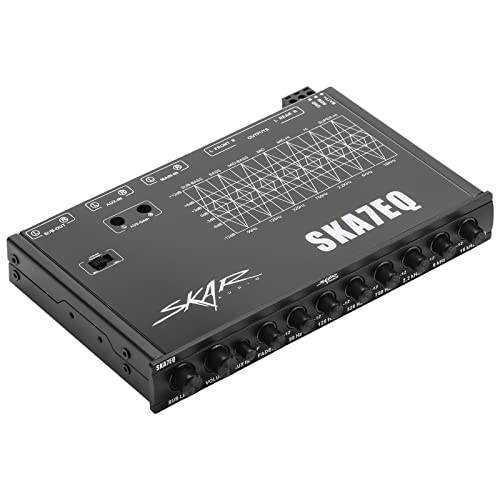
- Seven-band EQ with built-in fader control
- Dual RCA inputs with selectable aux
- 7V high-voltage preamp outputs and sub control
Best For: Analog systems that need a compact EQ and strong outputs
Full-Range DSP Pick
Memphis Audio VIV68DSP 6 in 8 Out DSP
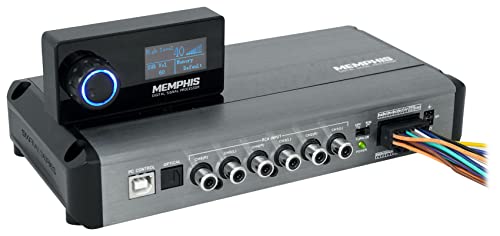
- Toslink optical input and wireless streaming
- 6-channel in / 8-channel out layout
- 31-band EQ per channel with delay and crossovers
Best For: full-system tuning with optical source support
Bass-Only Upgrade
Soundstream BX-12D Bass Restoration Processor

- Bass restoration and enhancement focus
- Remote knob for on-the-fly adjustment
- Works with factory or aftermarket systems
Best For: subwoofer systems needing more low-end punch
Multi-Channel Control
AP12 Pro 12-Channel Bluetooth USB DSP

- Optical and Bluetooth input support
- 12-channel low-level output
- 8-channel low/high-level inputs with remote control
Best For: larger systems needing flexible digital input and output
Budget Bass Restore
Audiobank AP15-1/2 Din Bass Processor

- Bass restoration and maximization
- Dash mount remote control included
- Subsonic filter with bass level control
Best For: Subwoofer-focused drivers wanting simple bass control
Full DSP Pick
CIARE CDSP1 Bluetooth Car Audio DSP

- 6-in / 8-out configurable DSP
- 31-band EQ, crossovers, and time alignment
- Remote plus PC/app tuning access
Best For: Installers and enthusiasts building custom multi-channel systems
Simple Bass Tuner

- Bass restoration with equalization
- Dash mount remote for quick changes
- Subsonic filter for subwoofer tuning
Best For: Drivers seeking simple, affordable bass adjustment
Optical DSP Pick – Optical-ready 8-channel DSP with PC control
If you’re shopping for car audio processors with optical input, the Hertz H8 DSP is built for systems that need flexible signal routing and computer-based tuning. It accepts both high-level speaker and low-level preamp inputs, and it adds optical and AUX switching for source selection through the DRC HE control.
Best For: Systems that need optical input, multi-channel processing, and PC tuning in a compact DSP.
Pros:
- Supports optical input along with AUX source selection.
- Accepts high-level speaker and low-level preamp inputs.
- Provides multiple preamp outputs, including front, rear, sub, and center.
- Includes USB connection for PC software control on Windows systems.
Cons:
- Software support is listed for Microsoft Windows only.
- Control and setup will be more involved than a basic equalizer.
Overall, the H8 DSP is a strong fit when you need an optical-capable processor with broad input and output flexibility. It is especially useful if you want fine control from a Windows PC and need to build a more advanced multi-speaker system.
Compact EQ Choice – Half-DIN EQ with front AUX and sub control
The Orion XEQ-X7 is a practical choice if you want one of the simpler car audio processors with optical input alternatives like front AUX and standard high/low-level hookup support. It focuses on core sound shaping with seven EQ bands, a dedicated subwoofer control section, and a compact half-DIN layout that fits easily into many installs.
Best For: Drivers who want a compact equalizer with simple source options and subwoofer adjustment.
Pros:
- Seven adjustable EQ bands with ±12 dB boost/cut.
- Supports both high-level and low-level inputs.
- Front 3.5mm AUX input for portable devices.
- Dedicated subwoofer level control and variable low pass filter.
Cons:
- No optical input is listed in the supplied notes.
- It is an equalizer, so it offers less processing depth than a full DSP.
For users who mainly want easy tuning and straightforward connectivity, the XEQ-X7 covers the essentials well. It is best viewed as a compact sound-shaping upgrade rather than an advanced digital processor.
Multi-Channel DSP Upgrade – 10-channel processor with optical SPDIF
Among car audio processors with optical input, the PZ-X6800S stands out for its 6-channel to 10-channel processing support and broad source compatibility. It accepts optical SPDIF, coaxial, Bluetooth 5.0, and low-level input, making it a versatile option for upgraded factory or premium amplifier systems.
Best For: Factory-upgrade systems that need optical SPDIF input and flexible multi-channel processing.
Pros:
- Supports optical SPDIF input, plus coaxial and Bluetooth 5.0.
- Designed for 6CH to 10CH processing.
- Offers 8-channel power output rated at 500W RMS.
- Includes Android app and Windows software control.
Cons:
- Setup may be more involved than a basic EQ or preamp unit.
- Best suited to systems that can use its multi-channel architecture.
This processor is a strong match when you need digital input options and enough channels to work with premium audio layouts. The combination of optical input, software control, and broad compatibility makes it especially useful for more customized builds.
Analog EQ Upgrade – 7-band EQ with high-voltage outputs
The Skar Audio SKA7EQ is a straightforward car audio processor for drivers who want strong analog control without extra digital complexity. It combines dual RCA inputs, built-in fader control, and high-voltage preamp outputs, making it a useful fit for systems centered on line-level signal management.
Best For: Analog-focused systems that need a compact EQ with strong preamp outputs.
Pros:
- Seven fully adjustable EQ bands with built-in fader control.
- Dual RCA inputs, including a selectable auxiliary input.
- High-voltage preamp RCA outputs rated up to 7V.
- Dedicated subwoofer level control and low-pass switch.
Cons:
- No optical input is listed in the supplied notes.
- Analog EQ design is less flexible than a full DSP processor.
The SKA7EQ is a practical choice when your build needs clean signal routing and easy tone shaping. It is less about advanced digital processing and more about giving you control over an analog car audio system.
Full-Range DSP Pick – Memphis Audio VIV68DSP 6 in 8 Out DSP
If you want one of the more flexible car audio processors with optical input, the Memphis Audio VIV68DSP is built for tuning a full system, not just one speaker zone. It offers 6-channel input, 8-channel output, Toslink optical input, wireless connection and audio streaming, plus PC, iOS, and Android control for detailed setup.
Best For: Drivers who want a feature-rich DSP for optical digital sources, active crossovers, and multi-channel tuning.
Pros:
- Toslink optical input plus wireless connection and audio streaming
- 6-channel input and 8-channel output for broader system integration
- 31-band equalizer per channel, delay, and 12/24 dB octave crossovers
- Remote included for preset recall and level control
Cons:
- More advanced than a basic processor for simple installs
- Built for tuning flexibility, so setup will take time
The VIV68DSP stands out if you need an optical-ready processor with serious tuning tools and app-based control. Its channel count and per-channel EQ make it a strong choice for detailed system dialing.
Bass-Only Upgrade – Soundstream BX-12D Bass Restoration Processor
The Soundstream BX-12D is aimed at listeners who want stronger low-end impact without rebuilding the whole system. Unlike full car audio processors with optical input and multi-channel tuning, this unit focuses on bass restoration and enhancement for factory or aftermarket setups.
Best For: Anyone who wants a simple bass enhancer and remote control for a subwoofer-focused system.
Pros:
- Restores and boosts low frequencies for deeper bass
- Included dash-mount remote knob for real-time adjustment
- Works as an Epicenter-style alternative for factory and aftermarket systems
- Low-profile design that should fit cleanly into an install
Cons:
- Not a full DSP for multi-channel sound shaping
- Focused on bass, so it won’t address full-range tuning needs
If your priority is low-end correction rather than full system processing, the BX-12D keeps things straightforward. It is best treated as a bass enhancement tool, not a replacement for a full-featured DSP.
Multi-Channel Control – AP12 Pro 12-Channel Bluetooth USB DSP
The AP12 Pro is a strong fit if you want car audio processors with optical input and the ability to manage a larger amplifier layout. It supports optical and Bluetooth input, includes 8-channel low/high-level inputs, and provides 12-channel low-level output for more advanced car audio systems.
Best For: Enthusiasts building a high-channel-count system who want optical input, Bluetooth, and flexible tuning control.
Pros:
- Supports optical input and Bluetooth 5.0 connectivity
- 12-channel low-level output for multi-amp or multi-speaker setups
- 8-channel low- and high-level inputs for broad compatibility
- Includes remote control and under-dash master knob with extension cable
Cons:
- Compact but geared toward more complex installs
- Best suited to users who will take advantage of the extra channel count
The AP12 Pro offers a lot of control in a compact footprint, especially if optical input is part of your source plan. It makes the most sense for larger systems where channel separation and output flexibility matter.
Budget Bass Restore – Audiobank AP15-1/2 Din Bass Processor
If you’re shopping for car audio processors with optical input alternatives centered on bass correction, the Audiobank AP15-1/2 Din is a simple in-line bass processor for restoring low-end energy and tightening subwoofer output. It focuses on bass maximization, low-frequency recovery, and easy dash-mounted control rather than full-system DSP tuning.
Best For: Drivers who want a compact bass restoration processor with a remote knob and straightforward subwoofer control.
Pros:
- Bass restoration processor that recreates and injects low-frequency information back into the signal path
- Includes a dash mount remote control for bass level adjustment
- Built-in subsonic filter and bass level control for subwoofer tuning
- Compact 1/2-din format with 15V RMS input handling
Cons:
- Focused on bass processing rather than full multi-channel DSP features
- Uses wired RCA/XLR-style connectivity; no optical input is listed in the supplied details
- Frequency response is limited to the bass-processing range described in the notes
This is a practical pick if your goal is to add more bass control without moving to a complex DSP setup. It keeps the feature set narrow and useful for subwoofer-focused upgrades.
Full DSP Pick – CIARE CDSP1 Bluetooth Car Audio DSP
For buyers comparing car audio processors with optical input, the CIARE CDSP1 stands out as a full-featured DSP for system tuning, even though the supplied notes list RCA and high-level inputs rather than optical. It gives you 6 inputs, 8 outputs, crossover control, time alignment, and detailed EQ for more advanced car audio builds.
Best For: Installers and enthusiasts who want a flexible DSP for OEM upgrades, aftermarket systems, and multi-channel tuning.
Pros:
- 6-in / 8-out DSP design with configurable outputs
- 31-band parametric EQ, active crossovers, and time alignment
- Supports low-level RCA and high-level speaker inputs for broad compatibility
- Includes remote control plus PC/app tuning access
Cons:
- No optical input is mentioned in the supplied product details
- More complex than a basic bass processor for casual users
- Requires setup and tuning to get the most from its features
The CDSP1 is the strongest all-around tuning option in this group if you need detailed control over crossovers, timing, and channel management. It is built for custom audio projects where sound shaping matters more than plug-and-play simplicity.
Simple Bass Tuner – Audiobank AP15 Bass Processor
If you want a straightforward option among car audio processors with optical input alternatives, the Audiobank AP15 keeps things focused on bass restoration and subwoofer control. It is designed to recreate low-frequency information, add a bass equalization circuit, and give you remote adjustment from the dash.
Best For: Drivers who want a no-frills bass processor for quick subwoofer tuning.
Pros:
- Bass maximizer and restoration processor for low-end enhancement
- Includes a dash mount remote control for easy level changes
- Subsonic filter and bass level control help refine subwoofer output
- Compact car-mount design with wired connectivity
Cons:
- Does not provide the advanced multi-band DSP controls of a full processor
- No optical input is listed in the supplied details
- Primarily aimed at subwoofer tuning rather than full-system integration
As a bass-focused processor, this model makes sense when you want a simple upgrade instead of a feature-heavy digital signal processor. It should appeal to drivers who mainly need cleaner, stronger low-end response.
How We Picked the Best Car Audio Processors with Optical Input
We looked for units that offer strong signal-management features, flexible connectivity, and useful tuning tools for real-world installs. Priority went to models that can improve clarity, integrate with factory or aftermarket systems, and support a range of build types without adding unnecessary complexity.
For Car Audio Processors with Optical Input, the most important advantage is clean digital signal transfer. That makes them especially useful when you want to reduce noise, preserve source quality, or connect to modern head units and digital sources.
Quick Comparison
Not every processor serves the same purpose. Some are full-featured DSPs with multi-channel output, time alignment, and EQ. Others are bass restoration or preamp-style processors meant for simpler upgrades. If you want complete system control, look for a DSP. If you mainly want stronger low-end response and easier factory integration, a bass processor may be enough.
Key Buying Factors for Car Audio Processors with Optical Input
Input and Output Flexibility
Check whether the processor supports the source type you actually have, along with enough outputs for your amp channels and speaker layout. More outputs usually mean more tuning freedom, but only if your system can use them.
Tuning Tools
Features like equalization, crossover control, time alignment, and level adjustment can dramatically improve sound quality. The more detailed the tuning options, the easier it is to correct cabin issues and balance your system.
Integration with Factory Audio
If you are upgrading a stock system, pay close attention to high-level input support, signal sensing, and remote control options. These details can make installation easier and help the processor work smoothly with OEM electronics.
Build Goals
A daily driver may need simple bass enhancement and easy setup, while a competition-style system benefits from advanced DSP functions and more channels. Match the processor to the complexity of your build instead of overbuying features you will not use.
Who Should Buy Which Car Audio Processors with Optical Input?
If you want the cleanest path to full-system tuning, choose a feature-rich DSP with broad output control. If your goal is mainly to add impact and restore low-frequency energy, a bass processor is the smarter value. Budget shoppers and first-time installers should favor models with straightforward controls and solid integration features. Enthusiasts building advanced systems should focus on processors with detailed tuning, enough channels for expansion, and the connectivity needed for their source unit.
In short, the best choice depends on how much control you want and how complex your audio system is. Start with your source, your amp count, and your tuning goals, then pick the processor that fits the build—not the other way around.