Factory audio systems can be stubborn when you want to add a subwoofer or amplifier. The right converter helps you tap speaker-level signal cleanly and keep bass response under control.
This roundup covers the best line output converters with equalization for 2026, with options for simple installs, bass restoration, remote turn-on convenience, and stronger signal tuning.
Best 10 Line Output Converters with Equalization Picks for 2026
Premium Active Converter
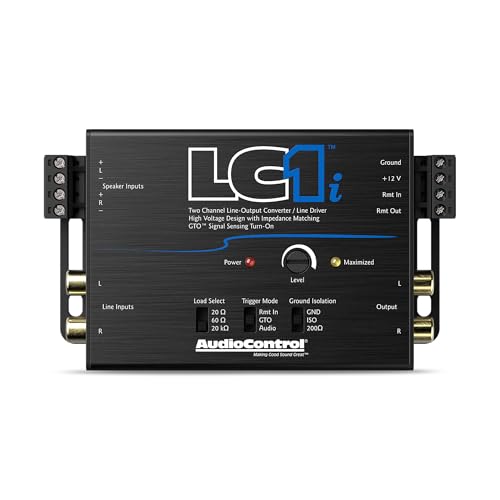
- Up to 400W (40V) per channel input handling
- Selectable load matching for modern OEM systems
- Built-in line driver and ground isolation
Best For: Factory integrations needing clean RCA output and load control
Easy Install LOC
Kicker KISLOC2 Stereo Converter

- Converts speaker signal to RCA output
- Creates a 12V remote turn-on wire
- Accepts up to 55 watts / 16 volts input
Best For: Simple add-an-amp installs from factory radios
Bass Compensation Converter

- BassLift helps restore factory bass roll-off
- Separate full-range and bass RCA outputs
- Includes detailed 34-page install manual
Best For: Systems that need bass correction and subwoofer output
Remote Control Converter
Scosche LOC2SL with Remote Knob
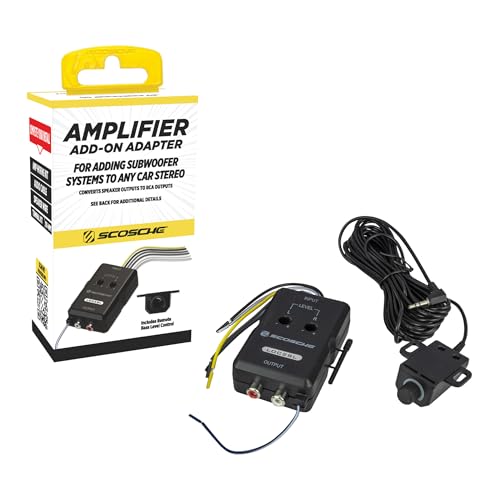
- Converts speaker level to RCA line level
- Includes a cabin remote control knob
- Compact surface-mount design
Best For: Compact installs with easy subwoofer level control
Premium 2-Channel LOC Driver
Recoil LOCD 2-in-1 Line Driver

- 2-in-1 LOC and line driver
- 10V RCA output with gain adjustment
- Auto-sense remote turn-on
Best For: Clean 2-channel amp installs that need stronger signal output
Bass-Repair 2-Channel Converter
AudioControl LC2i with AccuBASS
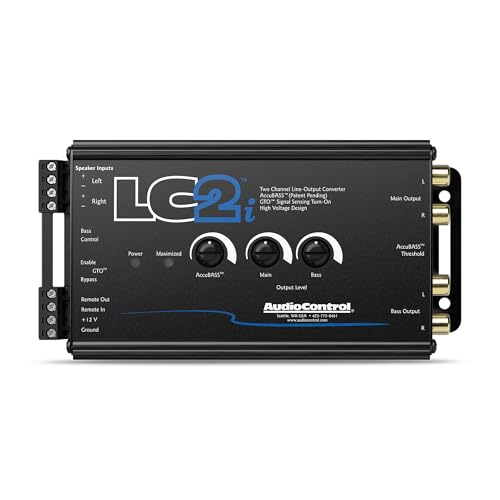
- AccuBASS helps restore bass roll-off
- Fixed and variable outputs
- Compact chassis with signal-sense turn-on
Best For: Factory systems that need bass correction and simple amp expansion
4-Channel Adjustable LOC
Recoil LOC4 with Remote Turn-On

- 4-channel adjustable speaker-to-RCA conversion
- Remote turn-on output included
- Audio transformer helps isolate noise
Best For: Multi-channel factory radio upgrades needing a clean RCA feed
Premium Factory Integration
AudioControl LC2i PRO with AccuBASS

- AccuBASS restores bass roll-off as volume rises
- Dual gain controls plus clipping indicator simplify tuning
- Ground isolation and GTO turn-on help with installation
Best For: Factory upgrades that need bass restoration and flexible control
Smart OEM Interface

- Preserves factory features during amplifier integration
- Signal sensing provides instant activation
- Speaker emulator support can reduce the need for resistors
Best For: Factory systems that need simple signal conversion and OEM compatibility
Bass Restoration Pick
AudioControl EPICENTER Micro Bass Processor

- Bass restoration circuit rebuilds low-end impact
- Adjustable frequency and width for tuning
- Includes speaker/line inputs plus dash remote control
Best For: Bass-focused builds that need low-end restoration and tuning
Premium Active Converter – AudioControl LC1i Line Driver
For line output converters with equalization-friendly tuning and clean signal handling, the AudioControl LC1i is built for factory systems that need a reliable upgrade path. It converts speaker-level input to pre-amp RCA output, adds a built-in line driver, and includes load selection options that help modern OEM amplifiers keep playing without interruption.
Best For: Factory systems where you need clean RCA output, load matching, and extra control over turn-on and noise.
Pros:
- Converts up to 400W (40V) per channel from speaker-level to pre-amp output
- Load selection switches offer 20 ohms, 60 ohms, and 20k ohms options
- Built-in line driver helps feed downstream amplifiers, subwoofers, and processors
- Selectable ground isolation can help reduce buzz or alternator whine
Cons:
- ACR-1 remote knob is sold separately
- Compact 2-channel design may not suit more complex multi-channel setups
The LC1i stands out if you want a more controlled factory-to-aftermarket transition, especially when load sensing and noise management matter. It is a practical choice for clean integration rather than basic signal conversion.
Easy Install LOC – Kicker KISLOC2 Stereo Converter
Kicker 46KISLOC2 K-Series Stereo Line-Output Converter w/Remote Turn-On Output
Check Price On AmazonThe Kicker KISLOC2 is a straightforward option in line output converters with equalization-aware factory integration when you mainly need a fast path from speaker wires to RCA. It converts speaker signal to RCA output and also generates a 12-volt remote turn-on lead using DC offset, making it a simple add-a-sub or add-an-amp solution.
Best For: Quick amplifier installs from factory radios where you want RCA output and a remote turn-on wire in one unit.
Pros:
- Automatically converts speaker signal to RCA and remote turn-on output
- Accepts up to 55 watts or 16 volts of input signal
- Compact stereo 2-channel design for basic aftermarket integration
- Works with radios that have speaker outputs
Cons:
- No mounting hardware or advanced control features are listed
- Limited to a basic 2-channel line-level conversion setup
This is a practical pick when you want an uncomplicated converter that handles the essentials without extra tuning controls. It favors ease of use and a clean install over advanced signal-shaping features.
Bass Compensation Converter – CT Sounds CT-LC2 BassLift LOC
The CT Sounds CT-LC2 is a strong fit for line output converters with equalization needs because its BassLift technology is designed to restore or compensate for factory bass roll-off. It converts high-level speaker signal to low-level RCA output and adds dedicated full-range and bass outputs, which can be useful when the factory system changes the sound before it reaches your amp.
Best For: Factory systems with bass roll-off that need dedicated RCA outputs for both speakers and subwoofers.
Pros:
- BassLift technology restores or compensates for factory bass roll-off
- Provides full-range main output and low-pass bass output
- Converts high-level speaker signal into low-level RCA input
- Includes a 34-page manual with step-by-step installation instructions
Cons:
- Only a 2-channel converter, so it may not cover larger systems
- Does not list remote turn-on output or load-matching controls
If your factory audio trims bass before the amplifier stage, this model is aimed at correcting that problem at the source. It is especially appealing for subwoofer-focused upgrades where preserving low-end output matters.
Remote Control Converter – Scosche LOC2SL with Remote Knob
The Scosche LOC2SL is a compact choice among line output converters with equalization-friendly factory integration when you want basic signal conversion plus a control knob. It turns speaker-level audio into RCA line level for an aftermarket amplifier and includes a remote knob, making it useful for dialing in subwoofer output from the cabin.
Best For: Drivers who want a compact 2-channel converter with remote subwoofer control and simple factory-radio integration.
Pros:
- Converts speaker-level signals to RCA line level for aftermarket amps
- Includes a remote control knob for easier subwoofer adjustment
- Compact surface-mount design fits tight install spaces
- Backed by lifetime tech support and limited lifetime warranty
Cons:
- No remote turn-on output is listed
- Basic 2-channel layout may be too simple for more advanced systems
This model is a good fit if you want a clean, compact converter with one convenient control included. It keeps the install straightforward while still giving you a way to adjust output without reaching for the amp.
Premium 2-Channel LOC Driver – Recoil LOCD 2-in-1 Line Driver
If you want line output converters with equalization-style level control in a compact setup, the Recoil LOCD is built as a 2-in-1 line output converter and line driver. It converts factory speaker-level signals to a 10V pre-amp RCA output, adds input gain adjustment, and includes auto-sense remote turn-on for easier amp integration.
Best For: Drivers who want a noise-resistant 2-channel LOC/line driver combo with strong output for aftermarket amplifiers.
Pros:
- 2-in-1 line output converter and line driver design
- High 10V RCA output with input gain adjustments
- Auto signal-sensing turn-on circuit
- Low-impedance design aimed at cleaner, noise-resistant operation
Cons:
- Only 2 channels, so it is not meant for multi-channel systems
- No built-in EQ controls are listed in the supplied details
- May still require careful setup to avoid clipping
The LOCD is a strong fit when you need a straightforward adapter that can also drive an amplifier with more authority than a basic converter. Its clipping LEDs and adjustable output make it practical for dialing in a clean install.
Bass-Repair 2-Channel Converter – AudioControl LC2i with AccuBASS
For line output converters with equalization-style bass correction, the AudioControl LC2i stands out because it adds AccuBASS processing to restore bass roll-off from factory systems. It converts speaker-level signals to RCA pre-amp output, supports fixed and variable outputs, and includes signal-sense turn-on options for easier amplifier integration.
Best For: Factory audio upgrades where bass roll-off correction and compact installation matter most.
Pros:
- AccuBASS technology helps restore bass lost at higher volume
- Speaker-level to RCA conversion for subwoofers, amps, and processors
- Compact chassis with integrated mounting brackets
- Selectable GTO signal sense or remote 12V input
Cons:
- Does not retain fader control when running multiple amplifiers
- 2-channel design may be limiting for larger systems
- Some installs may still need an optional remote turn-on wire
The LC2i is a proven choice when the factory radio sounds weak on bass and you need more than a basic signal converter. Its onboard controls and AccuBASS processing make it especially useful for OEM systems that change tone as volume rises.
4-Channel Adjustable LOC – Recoil LOC4 with Remote Turn-On
Recoil LOC4 Four Channel Speaker Cable to RCA Adjustable Line Output Converter with Remote Turn On
Check Price On AmazonIf you need line output converters with equalization-style control for a multi-channel factory system, the Recoil LOC4 is an adjustable 4-channel speaker-level to RCA converter. It is designed for adding an amplifier to a factory radio, uses an audio transformer for noise isolation, and includes remote turn-on output.
Best For: 4-channel factory audio upgrades that need adjustable conversion and remote turn-on support.
Pros:
- 4-channel adjustable speaker-to-RCA conversion
- Remote turn-on output included
- Audio transformer for noise isolation
- Rated for +/-0.5 dB linearity from 20-20,000 Hz
Cons:
- Designed for speaker-to-RCA conversion, not advanced signal processing
- No extra EQ or bass restoration features are listed
- May be more converter than needed for simple 2-channel installs
The LOC4 is a practical pick if your system needs four channels converted cleanly and you want a remote output built in. It focuses on straightforward, adjustable integration rather than adding extra tuning features.
Premium Factory Integration – AudioControl LC2i PRO with AccuBASS
If you want line output converters with equalization-style bass correction for a factory system, the AudioControl LC2i PRO is built for clean signal extraction and easy tuning. It converts speaker-level input to preamp output, adds AccuBASS to restore bass roll-off as volume rises, and includes controls that help keep the system stable and quiet.
Best For: Factory radio upgrades where you need strong bass restoration, remote bass control, and flexible turn-on options.
Pros:
- AccuBASS corrects and restores bass roll-off from factory radios as volume increases.
- Dual variable stereo gain controls and an LED clipping indicator make setup easier.
- Selectable GTO signal sense or remote 12V input gives you flexible turn-on options.
- Selectable ground isolation helps reduce ground buzz or alternator whine.
Cons:
- Designed as a 2-channel converter, so it is best suited to straightforward integration jobs.
- Some installation scenarios may require using the included remote and routing the 20-foot cable.
The LC2i PRO stands out when the main goal is preserving low-end impact from a factory system without complicating the install. Its compact chassis, load selection switches, and remote bass knob make it a practical choice for adding subwoofers or amplifiers to an OEM setup.
Smart OEM Interface – DS18 V2HL.V2 Speaker Emulator
The DS18 V2HL.V2 is a compact choice if you need line output converters with equalization-style system compatibility for a factory head unit. It is designed to preserve built-in vehicle functions while converting high-level speaker signal to low-level RCA output, and its speaker emulator feature helps keep certain OEM amplifier setups working without resistors.
Best For: Drivers integrating an aftermarket amplifier into a factory system while keeping OEM features and signal sensing intact.
Pros:
- Designed to connect directly to the factory head unit while preserving features like climate control, lighting, and GPS.
- Signal sensing technology enables instant activation when audio is detected.
- Speaker emulator support can help output from select OEM amplifiers without needing resistors.
- Compact 2-channel design with high-level input and RCA output keeps the setup simple.
Cons:
- It is a basic 2-channel converter, so it is aimed at straightforward applications.
- Best suited to systems where the speaker emulator behavior matches the OEM setup.
For a small, functional interface box, the V2HL.V2 focuses on compatibility rather than extra tuning features. Its FR4 double-sided PCB and simple connectivity make it a practical pick when you need a clean signal path and factory integration.
Bass Restoration Pick – AudioControl EPICENTER Micro Bass Processor
The AudioControl EPICENTER Micro is more than a basic converter, making it a strong option in the category of line output converters with equalization. Its bass restoration circuit rebuilds low-end content from upper harmonics, while the adjustable center frequency and width controls let you shape the result to fit your vehicle.
Best For: Enthusiasts who want to add deep bass impact and fine-tune the low end in a compact audio setup.
Pros:
- Patented bass restoration circuit synthesizes a low-frequency foundation from upper-range harmonics.
- Center frequency sweep from 27 to 63 Hz and adjustable width give you tuning flexibility.
- Includes both speaker and line-level inputs and outputs for downstream system integration.
- Dash mount remote control lets you adjust effect and bass level from the driver seat.
Cons:
- Its focus is bass restoration, so it is less about broad system processing than a full DSP-style solution.
- Best results will depend on careful tuning of the frequency and width controls.
This model is a good fit when you want to recover missing low end instead of simply converting signal levels. The compact chassis, high signal-to-noise ratio, and PFM subsonic filter make it a capable add-on for serious bass-focused builds.
How We Picked These Line Output Converters with Equalization
We focused on models that help solve common factory-audio problems: weak bass roll-off, limited RCA output, turn-on signal needs, and compatibility with modern OEM systems. Priority went to units with useful equalization or bass restoration features, adjustable output, solid channel support, and practical install features like auto-turn-on or speaker emulation.
We also considered whether the converter is better suited to a basic subwoofer add-on or a more flexible system build with multiple amps and tuning options.
Quick Comparison
For a straightforward 2-channel setup, compact active converters are usually the easiest choice. If your factory system reduces bass at higher volume, choose a model with bass restoration or EQ-style correction. For larger systems, four-channel options can be a better fit. If you want the simplest install, look for remote turn-on and auto-sense features to reduce extra wiring.
Key Buying Factors for Line Output Converters with Equalization
Signal Correction and Bass Restoration
Not every converter labeled as equalized performs the same job. Some focus on boosting missing bass, while others help preserve tonal balance from factory head units. If your audio sounds thin as volume rises, a converter with bass restoration or similar processing is especially valuable.
Channel Count and System Size
Two-channel units are ideal for feeding a mono sub amp or a simple amplifier setup. Four-channel models make more sense if you are adding full-range amplification or want to retain front/rear separation.
Output Level and Turn-On Features
Higher output voltage can improve signal strength and noise resistance, especially with longer RCA runs. Auto-sense or remote turn-on outputs can also simplify installation by powering your amplifier without extra accessories.
OEM Integration
Some factory systems use speaker emulation or other signal tricks that can confuse basic converters. If your vehicle has a premium or data-controlled audio system, choose Line Output Converters with Equalization and compatibility features designed for modern OEM signals.
Who Should Buy Which Line Output Converters with Equalization?
If you want the easiest upgrade for a factory system, choose a compact active 2-channel converter with remote turn-on. If bass loss is your biggest complaint, prioritize a model with bass restoration or stronger equalization control. If you are building a more complete system, a four-channel converter may give you better flexibility. For advanced OEM integration, look for the most capable active processors in this roundup rather than the simplest passive adapters.
In short, the best choice depends on your car audio goals: clean signal conversion, bass correction, easier installation, or broader expansion potential.