
If you want strong output without wasting space or power, class D full range amplifiers are a smart place to start. They’re built for efficient, flexible car audio setups that can power speakers cleanly.
This roundup focuses on 10 models that stand out for real-world usability, from compact 4-channel options to higher-output choices for more demanding systems.
Best 10 Class D Full Range Amplifiers Picks for 2026
Compact 4-Channel Full Range Pick
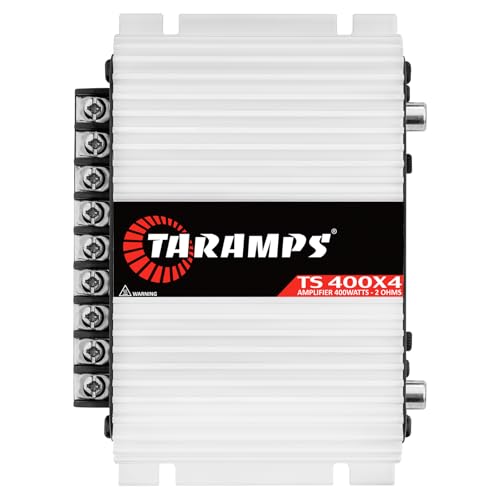
- 400W RMS total across 4 channels
- Bridged connections and fixed crossover
- Compact, lightweight multichannel design
Best For: Small systems needing a flexible full-range 4-channel amp
High-Power Multichannel Upgrade

- 1200W RMS total at 2 ohms
- High level and RCA inputs
- HPF, LPF, and full crossover modes
Best For: Larger systems needing a powerful full-range 4-channel amp
High-Output Bridgeable Choice

- 2400W max with 300W x 4 RMS at 2 ohms
- Bridgeable to 610W x 2 RMS at 4 ohms
- 2-4 ohm stable with bass EQ and crossover controls
Best For: Users wanting a bridgeable, high-output full-range 4-channel amp
Compact 4-Channel Power
CT Sounds CT-80.4D 4-Channel Class D Amp

- 80W RMS x 4 at 4 ohms; 125W x 4 at 2 ohms
- 250W RMS x 2 bridged for flexible setups
- Protection circuitry for voltage, current, and heat
Best For: Space-conscious daily systems needing a compact full-range amp
High-Output Versatility
Recoil DI550.4 Full-Range 4-Channel Amp

- 1040W max power with 80W x 4 at 4 ohms
- Gain, LPF, HPF, crossover, and bass EQ controls
- 4-way protection circuitry with MOSFET power supply
Best For: Flexible four-channel installs that need strong output and tuning control
Higher RMS Headroom
CT Sounds CT-150.4D 4-Channel Class D Amp

- 150W RMS x 4 at 4 ohms; 250W x 4 at 2 ohms
- 475W RMS x 2 bridged for larger speaker runs
- Compact chassis with MOSFET PWM power supply
Best For: Demanding speaker systems that need more RMS power in a compact amp
Compact 4-Channel Full-Range Pick

- 400W RMS total, 4-channel class-D full-range
- 100W x 4 at 2 ohms or 65W x 4 at 4 ohms
- Variable high-pass and low-pass filters, 40Hz–500Hz
Best For: Daily drivers and compact installs needing efficient speaker power
High-Power Budget Multichannel

- 2000W RMS at 2 ohms with 4 x 500W RMS
- Class-D full-range design with bridged support
- LED indicator, auto-restart protection, fixed crossover
Best For: Large car audio systems that need high output and flexible bridging
Higher-Output Compact Upgrade

- 600W RMS total in a compact 4-channel chassis
- 150W x 4 at 2 ohms or 100W x 4 at 4 ohms
- Adjustable high/low pass filters from 40Hz–500Hz
Best For: Speaker-focused upgrades needing more output in a compact amp
Compact 4-Channel Full Range Pick – Taramps TS 400×4 400W RMS
If you want class d full range amplifiers for a compact, flexible car audio setup, the Taramps TS 400×4 is built for exactly that kind of use. It delivers 400 watts RMS total across four channels, supports bridged connections, and includes a fixed crossover with gain control for straightforward tuning.
Best For: Small car audio systems that need a versatile 4-channel amp for door speakers, tweeters, or light multichannel setups.
Pros:
- 400 watts RMS total, with 100 watts RMS per channel at 2 ohms
- Full range design with 4 channels and bridged connection support
- Includes LED indicator, short-circuit protection, and fixed low-pass crossover
- Compact chassis with low weight for easier installs
Cons:
- Fixed crossover limits tuning compared with more adjustable amps
- Power output is best suited to modest systems, not huge builds
- Runs on a narrow 8V to 16V DC supply range
The TS 400×4 makes sense if you want a practical full-range multichannel amplifier with simple controls and broad speaker compatibility. It is a strong fit for everyday upgrades where size, flexibility, and clean channel separation matter more than maximum output.
Ultra-Compact Full-Range Option – Skar Audio SK-M4004D 400W
The Skar Audio SK-M4004D is a practical choice if you’re shopping class d full range amplifiers for a tight install. This ultra-compact 4-channel model delivers 100 watts x 4 at 4 ohms or 140 watts x 4 at 2 ohms, and its full-range crossover modes make it easy to match to different speaker setups.
Best For: Installations that need a small, efficient 4-channel amplifier with full-range flexibility.
Pros:
- Ultra-compact 4-channel Class D design
- Full-range crossover controls: HPF, Full-Range, and LPF
- Frequency response from 10Hz to 40kHz
- Includes hi-level input connections and 8-gauge power/ground terminals
Cons:
- Lower output than larger 4-channel options in this roundup
- Voltage range is limited to 14.0V to 14.4V
- Not ideal if you need bridged high-power output
For buyers who value size and flexibility, this amp covers the essentials without taking much space. It is a clean fit for small-to-medium systems where full-range tuning and compact mounting matter more than raw power.
High-Power Multichannel Upgrade – Taramps TS 1200×4 1200W RMS
If you need class d full range amplifiers with substantially more output, the Taramps TS 1200×4 is aimed at larger and more demanding setups. It delivers 1200 watts RMS at 2 ohms, uses four channels, and adds high level and RCA inputs along with fixed HPF, LPF, and full-range crossover options.
Best For: Bigger systems that need a powerful 4-channel amplifier for speakers, drivers, tweeters, and similar full-range loads.
Pros:
- 1200 watts RMS total with 300 watts RMS per channel at 2 ohms
- High level and RCA inputs for flexible integration
- Fixed crossover options include HPF, LPF, and full mode
- Designed for a wide range of speaker types, including drivers and super tweeters
Cons:
- Requires more installation planning than smaller compact amps
- Best output is specified at 2 ohms, so system matching matters
- Heavier and larger than entry-level 4-channel models
This model is a strong step up if you want a full-range multichannel amp with serious power and broad compatibility. It stands out for buyers who need room to grow and want more headroom for a more ambitious audio system.
High-Output Bridgeable Choice – Recoil DI1200-4 2400W Max
The Recoil DI1200-4 is worth a look if you want class d full range amplifiers with bridgeable output and more tuning control. It delivers up to 2400 watts max power, supports 2-4 ohm stability, and includes gain, LPF, HPF, crossover, and bass EQ controls for more precise system matching.
Best For: Flexible systems that need a bridgeable 4-channel amp with strong output and detailed controls.
Pros:
- 2400 watts max power with 300 watts x 4 RMS at 2 ohms
- Bridgeable design with up to 610 watts x 2 RMS at 4 ohms
- 2-4 ohm stable with a MOSFET power supply
- Includes 4-way protection circuitry and adjustable user controls
Cons:
- Max power rating is much higher than RMS output, so expectations should stay realistic
- Larger than ultra-compact options in this roundup
- More controls mean more setup time for simple installs
For buyers who want a powerful, tuneable 4-channel amp, this Recoil model offers a lot of flexibility. It is best suited to systems where bridgeability, protection features, and control depth matter as much as raw output.
Compact 4-Channel Power – CT Sounds CT-80.4D 4-Channel Class D Amp
CT Sounds CT-80.4D Full-Range Class D 4 Channel Car Audio Amplifier, 480 Watts RMS
Check Price On AmazonIf you want class d full range amplifiers for a clean, space-saving four-channel setup, the CT Sounds CT-80.4D is built around efficient power delivery and a compact chassis. It offers 80 watts RMS x 4 at 4 ohms, 125 watts RMS x 4 at 2 ohms, and 250 watts RMS x 2 bridged, with protection circuitry for high voltage, low voltage, over current, and high temperature.
Best For: Daily driver systems that need a compact full-range amp for front/rear speakers or a simple bridged setup.
Pros:
- 4-channel full-range Class D design with 480 watts output power
- Compact size at 7.87″ x 5.63″ x 2.19″ for easier installation
- Protection circuitry covers voltage, current, and temperature issues
- Bridged output support adds flexibility for different speaker layouts
Cons:
- Lower RMS ratings than the larger CT Sounds 4-channel option
- Requires a 14 to 14.4 volt supply range
This is a straightforward pick if your priority is a compact full-range four-channel amplifier with practical power and built-in safeguards. It fits best in systems where installation space matters more than chasing the highest output numbers.
High-Output Versatility – Recoil DI550.4 Full-Range 4-Channel Amp
For shoppers comparing class d full range amplifiers, the Recoil DI550.4 stands out with higher peak output and adjustable tuning controls. It is rated at 80 watts RMS x 4 at 4 ohms, 130 watts RMS x 4 at 2 ohms, and 260 watts RMS x 2 bridged, and it adds gain, LPF, HPF, crossover, and bass EQ controls for dialing in the system.
Best For: Installations that need a flexible four-channel amp with extra tuning control and strong output options.
Pros:
- 1040 watts max power with 4-channel Class D design
- Bridgeable output reaches 260 watts x 2 at 4 ohms
- High-speed MOSFET power supply and premium internal components
- 4-way protection circuitry and adjustable crossover/bass EQ controls
Cons:
- Its max-power rating is higher than its RMS output, so setup should be matched carefully
- Larger feature set may be more than needed for simple speaker upgrades
The DI550.4 is a practical choice when you want more tuning flexibility than a basic four-channel amp offers. It is especially appealing if you plan to fine-tune the system rather than just plug in and play.
Higher RMS Headroom – CT Sounds CT-150.4D 4-Channel Class D Amp
CT Sounds CT-150.4D Full-Range Class D 4 Channel Car Audio Amplifier, 1000 Watts RMS
Check Price On AmazonThe CT Sounds CT-150.4D is aimed at buyers who want class d full range amplifiers with more RMS headroom in a compact format. It delivers 150 watts RMS x 4 at 4 ohms, 250 watts RMS x 4 at 2 ohms, and 475 watts RMS x 2 bridged, while using a MOSFET PWM power supply and proprietary heat dissipation design to help it run cool.
Best For: Systems that need a compact four-channel amp with stronger RMS output for demanding speaker setups.
Pros:
- Higher RMS output than the CT-80.4D, including 150W x 4 at 4 ohms
- 250W RMS x 4 at 2 ohms and 475W RMS x 2 bridged
- Compact footprint for easier installation in many vehicles
- 4-way protection circuitry plus MOSFET PWM power supply
Cons:
- Needs more electrical headroom than lower-output amps in the lineup
- Single-purpose four-channel layout may be more than some basic systems require
This model makes sense when speaker power is the priority and you still want a compact amp that is easy to place. Among full-range four-channel options, it offers the most RMS muscle of the three products here.
Compact 4-Channel Full-Range Pick – Orion Cobalt Elite CEA400.4D
If you want a class d full range amplifiers option for mids, highs, or a simple full-range speaker upgrade, the Orion Cobalt Elite CEA400.4D is built around clean 4-channel output in a compact chassis. It delivers up to 400W RMS total, with flexible 2-ohm and 4-ohm operation and adjustable high- and low-pass filtering for dialing in a practical system.
Best For: Daily drivers and space-limited installs that need efficient 4-channel power for door speakers, component sets, or bridged setups.
Pros:
- Class-D full-range design helps keep heat and current draw down.
- Delivers 100W RMS x 4 at 2 ohms or 65W RMS x 4 at 4 ohms.
- Adjustable high-pass and low-pass filters from 40Hz to 500Hz.
- Compact chassis fits easily in cars, trucks, and SUVs.
Cons:
- Power output is modest compared with higher-wattage 4-channel options.
- Best suited to speaker upgrades rather than heavy bass duty.
Overall, this is a straightforward, efficient pick for clean multi-channel power where size and flexibility matter. It makes more sense for controlled full-range systems than for oversized output goals.
High-Power Budget Multichannel – Taramp's DS 2000×4
The Taramp’s DS 2000×4 is a class d full range amplifiers choice built for high output and flexible multichannel use. With 2000W RMS at 2 ohms, four 500W RMS channels, and bridged capability, it fits larger car audio setups that need serious power and a full-range design with fixed crossover control.
Best For: Bigger systems that need high power, bridged flexibility, and cost-conscious multichannel amplification.
Pros:
- 2000W RMS total at 2 ohms with 500W RMS per channel.
- Full-range multichannel design supports 2- or 4-channel configurations.
- Bridged connections add system flexibility.
- Includes LED indicator, auto-restart protection, and level control.
Cons:
- Uses a fixed crossover rather than variable tuning.
- Power requirements and wiring are more demanding, including 4 AWG power cable and a 100A fuse.
This amp is a strong fit when raw output and flexible channel use matter more than advanced tuning. It offers a practical way to build a powerful full-range system without moving into a specialized processor-heavy setup.
Higher-Output Compact Upgrade – Orion Cobalt Elite CEA600.4D
For shoppers comparing class d full range amplifiers, the Orion Cobalt Elite CEA600.4D steps up the same compact 4-channel formula with more headroom. It’s rated at 600W RMS total, offers 2-ohm and 4-ohm stability, and includes adjustable high- and low-pass filters for tailoring mids, highs, or full-range speaker systems.
Best For: Installers and daily drivers that want more output than a basic 4-channel amp without giving up a slim footprint.
Pros:
- 600W RMS total provides more output than the smaller 400W model.
- 150W RMS x 4 at 2 ohms or 100W RMS x 4 at 4 ohms.
- Variable high-pass and low-pass filters from 40Hz to 500Hz.
- Compact, surface-mount design for flexible placement.
Cons:
- Still a 4-channel amp, so it’s not intended as a dedicated subwoofer powerhouse.
- It prioritizes efficient full-range use over advanced feature depth.
This model makes sense when you want a cleaner, more powerful version of a compact full-range amplifier. It’s a balanced upgrade for speaker-focused systems that need efficiency and a bit more output.
How We Picked These Class D Full Range Amplifiers
We focused on the features that matter most in everyday installs: RMS power, channel count, bridgeability, load stability, crossover controls, input options, and physical size. We also favored models with enough flexibility to work in both basic upgrade systems and more advanced builds.
Because Class D Full Range Amplifiers are often chosen for efficiency and easy integration, we gave extra weight to models that balance output with practical installation needs rather than just peak power claims.
Quick Comparison
For smaller upgrades, compact 4-channel amps are usually the best fit, especially when space and simplicity matter. If you’re powering multiple speakers, want more headroom, or plan to bridge channels, step up to a higher-RMS model with stable output at the impedance you actually run.
Look closely at whether the amplifier supports 2-ohm or 4-ohm operation, and whether it includes fixed or variable crossover settings. Those details often matter more than raw wattage on paper.
Key Buying Factors for Class D Full Range Amplifiers
Real RMS Power
Match the amplifier’s continuous power to your speakers’ handling, not just peak numbers. A well-matched amp can sound cleaner and avoid clipping.
Channel Layout and Bridging
Four-channel amps are ideal for front-and-rear speaker systems, while bridgeable designs offer more flexibility if you want to combine channels for higher output on fewer speakers.
Load Stability
Check whether the amp is stable at 2 ohms, 4 ohms, or both. This affects how much power you can safely extract and what speaker wiring options you have.
Crossover and Input Controls
High-pass, low-pass, or full-range crossover options help tailor the amp to speakers, coaxials, or component setups. RCA and speaker-level inputs can also simplify integration with factory or aftermarket head units.
Size and Heat Management
Compact Class D Full Range Amplifiers are easier to mount, but make sure the enclosure and ventilation suit your install location. Efficient amps run cooler, but they still need airflow.
Who Should Buy Which Class D Full Range Amplifiers?
If you want a straightforward speaker upgrade, choose a compact 4-channel amp with modest RMS output and simple crossover controls. If you’re building a louder system or need extra headroom, look for higher-power, bridgeable models with strong 2-ohm stability.
For factory system integration, prioritize input flexibility and adjustable filtering. For aftermarket builds, focus on clean RMS output, wiring compatibility, and the right balance of power and footprint. The best Class D Full Range Amplifiers are the ones that match your speakers, your space, and your tuning goals.