Great two-way active systems depend on more than power and speaker quality. A good DSP gives you the control to set crossover points, time alignment, equalization, and output levels with precision.
This roundup focuses on car DSP processors for two way active systems that make tuning easier, cleaner, and more flexible for modern car audio builds.
Best 10 Car Dsp Processors for Two Way Active Systems Picks for 2026
Flexible 4x8 DSP
Dayton Audio DSP-408 4 In / 8 Out

- 4 inputs and 8 outputs with input/output mixing
- 10-band parametric EQ on all eight outputs
- Built-in EQ, crossovers, and time alignment
Best For: Users who want flexible routing and easy GUI-based tuning
App-Control DSP
Banda Audiopart X8AiR 8-Channel
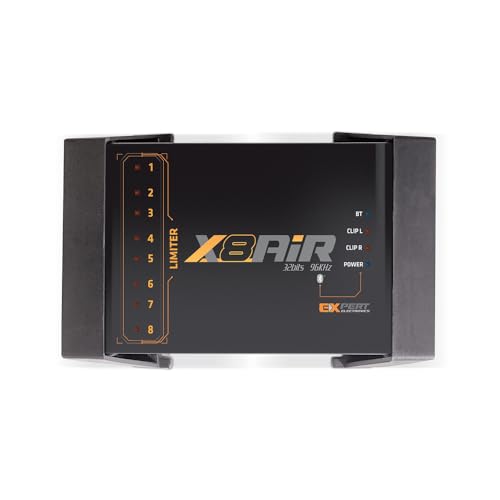
- 32-bit/96kHz DSP with 79-band EQ per channel
- Bluetooth app control for real-time tuning
- 4 inputs and 8 outputs for active system layouts
Best For: Drivers who want detailed app-based tuning for active systems
Crossover-Focused DSP
Stetsom STX 2848 PRO 8-Channel

- 8 outputs with 2 inputs for active builds
- Variable crossover slopes up to 48 dB/octave
- Limiter, delay, and sequencer functions included
Best For: Installers who want crossover flexibility and protection tools
Factory Integration DSP
AudioControl DM-810 8x10 Matrix Processor

- 8x10 channel matrix processor with multiple input types
- 30-band EQ, RTA, and DM Smart App support
- AccuBASS and OEM summing for factory systems
Best For: Factory integration builds needing broad input and output flexibility
Bluetooth DSP with Built-In Voltmeter

- Bluetooth control from Android/iOS
- Real-time EQ, crossover, and alignment tuning
- Built-in voltmeter plus sequencer outputs
Best For: Compact app-tuned systems that need flexible DSP control
App-Controlled DSP PRO with High-Precision Crossover
Stetsom STX 2436 Bluetooth DSP PRO

- Android and iOS app control
- 12-band EQ with high-precision crossover
- RCA and high-level inputs for factory radios
Best For: Installers wanting smartphone control and precise crossover tools
LCD DSP Crossover with Sequencer Relay

- LCD interface with real-time adjustments
- 2 inputs and 4 independent outputs
- 15-band EQ with 12 presets and sequencer relay
Best For: Tuners who prefer onboard control and simple routing
Bluetooth app DSP
Taramps Pro 2.4 BT DSP Crossover Full
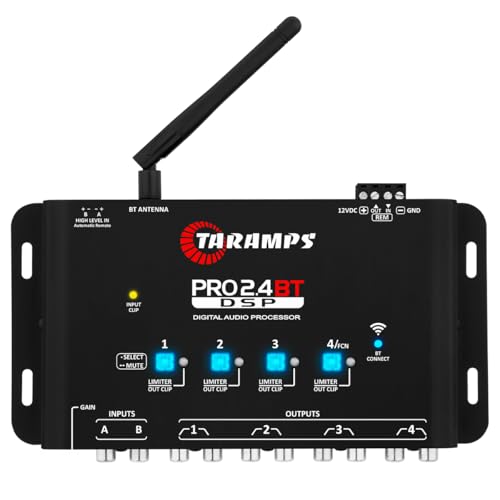
- Bluetooth 5.4 BLE app control
- 15-band EQ with delay and phase tools
- High-level input with auto turn-on
Best For: Simple active systems and OEM-friendly installs
8-channel DSP control
PRV AUDIO DSP 2.8X 8 Channel Processor
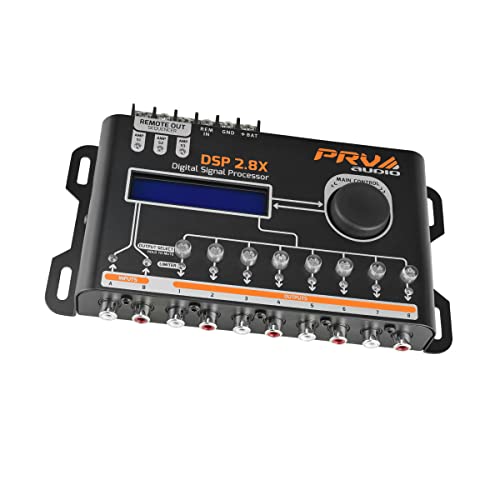
- 2 inputs and 8 independent outputs
- LCD interface with real-time adjustments
- 15-band EQ with 12 presets
Best For: Flexible active systems needing 8 output channels
Advanced tuning DSP
Taramps Pro 2.8S Black 8-Channel DSP

- 2 inputs and 8 outputs
- Time alignment, EQ, crossover, and limiters
- Integrated audio generator for calibration
Best For: Feature-heavy active systems and sound-quality tuning
Flexible 4×8 DSP – Dayton Audio DSP-408 4 In / 8 Out
If you’re comparing car dsp processors for two way active systems, the Dayton Audio DSP-408 is a flexible 4-input, 8-output option built around real-time control, built-in EQ, crossovers, time alignment, and input/output mixing. It fits well when you want straightforward tuning for both home and car audio-style installations without overcomplicating the setup.
Best For: Tuning-friendly installs that need flexible routing and easy GUI control.
Pros:
- Eight output channels with fully adjustable 10-band parametric EQ on each output
- Built-in crossovers, time alignment, and input/output mixing for custom system layouts
- Graphical user interface designed for easier setup and tuning
- Optional Bluetooth dongle and wired remote available for added convenience
Cons:
- Notes do not mention Bluetooth control is included by default
- Designed for broad application, so it may feel less specialized than premium car-only DSP units
Overall, the DSP-408 stands out if you want solid tuning tools and flexible channel management in a practical package. It offers the kind of control that helps a two way active system get properly aligned and balanced.
App-Control DSP – Banda Audiopart X8AiR 8-Channel
Among car dsp processors for two way active systems, the Banda Audiopart X8AiR is aimed at users who want detailed control and app-based tuning. Its 32-bit/96kHz DSP, 79-band equalizer per channel, crossover adjustment, time alignment, phase control, and limiter make it a strong fit for more complex active front-stage setups.
Best For: Enthusiasts who want deep DSP tuning from a smartphone app.
Pros:
- 32-bit/96kHz DSP for precise multi-channel tuning
- 79 EQ bands per channel plus crossover, time alignment, phase, and limiter controls
- Bluetooth and mobile app control for real-time adjustments
- 4 inputs and 8 outputs support multi-amplifier and component-speaker setups
Cons:
- Many advanced controls may be more than a basic setup needs
- Notes do not list a hardware remote or physical display interface
The X8AiR is a strong choice when fine tuning matters and you want to adjust a system without constantly working at the unit itself. For active two-way builds, its channel count and tuning depth are especially relevant.
Crossover-Focused DSP – Stetsom STX 2848 PRO 8-Channel
The Stetsom STX 2848 PRO is built for users comparing car dsp processors for two way active systems and wanting a focused crossover/equalizer platform. It combines 8 independent outputs, 2 audio inputs, variable crossover slopes, delay adjustment, and limiter tools in a compact processor with an LCD interface.
Best For: Clean active-system tuning with crossover flexibility and limiter control.
Pros:
- 8 independent outputs with 2 audio inputs
- Variable crossover options from 12 to 48 dB/octave
- 15-band graphic EQ, delay adjustment, and limiter with dynamic attack-release
- LCD display with interface lock and sequencer features
Cons:
- Notes do not mention Bluetooth or app control
- 15-band graphic EQ is less granular than DSPs offering many more parametric bands
For builders who care more about crossover behavior and system protection than wireless features, the STX 2848 PRO is a practical option. It gives you the controls needed to shape and protect an active front stage.
Factory Integration DSP – AudioControl DM-810 8×10 Matrix Processor
If your search for car dsp processors for two way active systems includes factory integration, the AudioControl DM-810 is a capable matrix processor with 8 x 10 channel architecture, AccuBASS, OEM summing, and RTA-based tuning support. Its mix of speaker-level, RCA, digital inputs, and multiple outputs makes it suitable for complex factory or aftermarket systems.
Best For: Factory-integration builds that need precise tuning and signal management.
Pros:
- Four sets of speaker-level inputs plus RCA, S/PDIF, and TOSLINK inputs
- Five sets of RCA line-level preamp outputs for flexible system routing
- DM Smart App, RTA support, 30-band EQ, and AccuBASS processing
- Summing and OEM integration tools for factory systems
Cons:
- More processor than many simple two-way-only installs require
- Notes emphasize integration and summing, so tuning workflow may be more involved
The DM-810 is best viewed as a serious integration DSP rather than a minimal tuning box. For users dealing with factory signal complexity, it provides the tools needed to build a clean active system foundation.
Bluetooth DSP with Built-In Voltmeter – Timpano TPT-SP4BT
If you want a practical entry point into car dsp processors for two way active systems, the Timpano TPT-SP4BT focuses on flexible tuning in a compact package. It works with aftermarket units or factory radios and lets you make real-time changes from a phone or tablet, so setup is straightforward for users who want to shape crossover, EQ, and alignment settings without adding bulk.
Best For: Mobile tuners who want app-based DSP control, a built-in voltmeter, and remote relay sequencing in a small chassis.
Pros:
- Bluetooth app control from Android or iOS phones and tablets
- Real-time adjustment of EQ, crossover filters, alignment, gain, phase inversion, and limiter
- Includes battery voltmeter, frequency generator, sweep, and pink noise tools
- Sequencer feature can trigger up to three products on startup and shutdown
Cons:
- Only four output channels, which may limit larger system layouts
- Setup depends on a compatible mobile app
- Best suited to users comfortable tuning digitally rather than by hardware controls alone
Overall, the TPT-SP4BT is a good match if you want app-driven control and handy diagnostic tools in a very compact DSP. Its real strength is giving you the core tuning functions needed for an active system while keeping the interface simple and mobile.
App-Controlled DSP PRO with High-Precision Crossover – Stetsom STX 2436 Bluetooth DSP PRO
For car dsp processors for two way active systems, the Stetsom STX 2436 is built around smartphone control and detailed sound adjustment. It offers Bluetooth app support for Android and Apple devices, along with a 12-band graphic EQ, high-precision crossover tools, and input options that make it easier to integrate with factory or aftermarket sources.
Best For: Users who want app-based tuning, password protection, and precise crossover control in a compact DSP.
Pros:
- Bluetooth control with Android and iOS app support
- 12-band graphic equalizer for broad sound shaping
- High-precision crossover, filters, voltmeter, and limiter functions
- RCA and high-level input support for factory original stereo integration
Cons:
- Requires Android 5.0+ or iOS 12+ for app use
- Bluetooth range is listed at up to 49 feet in unobstructed conditions
- Interface is compact, so users may prefer a mobile-first workflow
The STX 2436 stands out for users who want a digitally tuned system with strong control over crossover and EQ settings. Its password protection and factory-input support make it a practical option for organized installs that still need fine adjustment.
LCD DSP Crossover with Sequencer Relay – PRV AUDIO DSP 2.4X
The PRV AUDIO DSP 2.4X is a straightforward choice for car dsp processors for two way active systems when you want direct control from an onboard display instead of a phone app. Its LCD interface, dual inputs, and independent 4-channel outputs make it easy to route signals and apply crossover, EQ, and parametric adjustments in a compact processor.
Best For: Hands-on tuners who want onboard controls, routing flexibility, and sequenced remote triggering.
Pros:
- LCD display and intuitive interface for real-time adjustments
- 2 inputs with 4 independent outputs and source selection per output
- 15-band graphic EQ plus 12 preset tuning options
- Sequencer remote trigger connection for startup control of other products
Cons:
- No Bluetooth app control listed
- Output count is limited to four channels
- Onboard interface may feel less flexible than phone-based tuning for some users
In practice, the DSP 2.4X is appealing if you prefer local control and clear signal routing over wireless app management. It packs the core tuning tools most active-system builds need, while keeping the interface and feature set focused.
Bluetooth app DSP – Taramps Pro 2.4 BT DSP Crossover Full
If you’re building car dsp processors for two way active systems, the Taramps Pro 2.4 BT is a compact choice for dialing in crossover points, EQ, delay, and phase from an app. It offers 2 inputs and 4 outputs, plus high-level input with auto turn-on, so it can fit both factory and aftermarket installs while still giving you detailed tuning control.
Best For: Daily drivers and compact active front-stage setups that need app-based tuning and easy integration.
Pros:
- Bluetooth 5.4 BLE app control for real-time tuning from a phone or tablet
- 15-band graphic EQ, parametric EQ, crossover filters up to -48dB/octave, delay, phase inversion, and limiter
- High-level input with auto turn-on makes OEM integration easier
- RCA inputs support up to 9V RMS, with an external Bluetooth antenna for better range
Cons:
- Only 2 inputs and 4 outputs, so it is less flexible than larger multi-output DSPs
- Best suited to smaller systems rather than complex multi-way builds
For buyers who want straightforward tuning and solid integration options, this DSP covers the essentials without feeling overly complicated. Its wireless control and practical input options make it a strong pick when you want precise front-stage tuning in a simpler format.
8-channel DSP control – PRV AUDIO DSP 2.8X 8 Channel Processor
The PRV AUDIO DSP 2.8X is a practical fit for car dsp processors for two way active systems when you want independent crossover control across multiple outputs. With 2 inputs, 8 outputs, and selectable source routing, it gives you enough flexibility to manage a front active setup and expand from there.
Best For: Builders who want an 8-channel DSP with simple local controls and source-routing flexibility.
Pros:
- 2 inputs and 8 independent outputs for flexible system routing
- LCD display and intuitive interface support real-time adjustments
- 15-band graphic EQ plus 12 preset sound curves for quick tuning
- Includes parametric EQ adjustments and sequencer remote relay support
Cons:
- Front-panel style interface may be less convenient than app-based tuning
- Feature set is focused on core DSP functions rather than advanced wireless workflow
This is a good option if you want broad output flexibility without leaning on a smartphone app. The 8-channel layout and source selection make it especially useful when you need to manage active crossover duties cleanly and directly.
Advanced tuning DSP – Taramps Pro 2.8S Black 8-Channel DSP
For car dsp processors for two way active systems that may grow into more complex builds, the Taramps Pro 2.8S brings detailed control across 2 inputs and 8 outputs. It combines graphic and parametric EQ, multiple crossover filter types, time alignment, phase inversion, and limiters, so it suits buyers who want more room to fine-tune sound quality.
Best For: Users who want a feature-rich DSP for active systems, tuning, and future expansion.
Pros:
- 2-channel input and 8-channel output layout for broader system control
- 15-band EQ, parametric EQ, crossover filters, time alignment, phase inversion, and limiters
- Integrated audio generator for calibration and frequency sweep testing
- 12 preset EQ curves plus Standard and Dynamic modes for different tuning styles
Cons:
- More advanced feature set may be more than needed for very basic two-way systems
- Designed for detailed setup, so it may take more time to configure well
This model stands out when you want more than just basic crossover duties. Its calibration tools and deep tuning options make it a strong choice for users focused on sound quality and precise system setup.
How We Picked the Best Car Dsp Processors for Two Way Active Systems
We looked for processors that support true active front-stage tuning, with enough output channels for tweeter and midrange control, plus practical tools such as parametric or graphic EQ, crossover filters, delay, and level management. We also favored models with app control, Bluetooth, OEM integration options, or remote relay features when they add real-world convenience.
Quick Comparison
For Car Dsp Processors for Two Way Active Systems, the most important spec is channel count paired with tuning flexibility. Four-output models can work for simple front-stage active setups, while 8-channel and matrix-style units are better if you want more expansion, sub integration, or rear-fill control. Higher-voltage outputs and stronger integration features can also make installation easier in factory-based systems.
Key Buying Factors for Car Dsp Processors for Two Way Active Systems
Channel Count and Routing
Make sure the processor has enough independent outputs for left and right tweeters and mids, plus any subwoofer or additional channels you want to keep separate. Flexible routing matters just as much as raw channel count.
Crossover and Time Alignment Control
Look for adjustable high-pass, low-pass, and band-pass filters with enough slope and frequency precision to match your speakers. Time alignment is especially important in active systems because it helps center the image and balance staging inside the cabin.
EQ Resolution and Tuning Access
More EQ bands can help with fine correction, but the interface matters too. App-based tuning, PC software, or a clear front-panel workflow can save time and make it easier to dial in a clean result.
Input and Integration Features
If you are keeping a factory head unit, prioritize OEM integration tools, high-level input support, and features like auto turn-on or signal sensing. These details can reduce installation hassle and improve compatibility.
Output Voltage, Noise, and Control Extras
Higher output voltage can help drive amplifiers more cleanly, while useful extras like sequencers, remote relays, voltmeters, and AccuBASS-style processing can add convenience and system protection.
Who Should Buy Which Car Dsp Processors for Two Way Active Systems?
Choose a simpler 4-output DSP if you are building a basic active two-way front stage and want straightforward tuning. Pick an 8-channel or matrix processor if you expect to expand, add sub control, or fine-tune a more complex system. If you are working with a factory stereo, focus on integration-friendly models with app control and signal management tools. For most enthusiasts shopping Car Dsp Processors for Two Way Active Systems, the best choice is the one that matches your channel needs first and your tuning workflow second.