Upgrading your sound system can demand more power than a single battery should handle. The right isolator helps protect your starter battery while giving your audio setup the current it needs.
Below, we’ve narrowed down 10 of the best battery isolators for car audio in 2026, with options for daily drivers, marine use, off-road builds, and high-current installs.
Best 10 Battery Isolators for Car Audio Picks for 2026
Heavy-Duty Choice
Stinger SGP35 500-Amp Dual Battery Relay

- 500A continuous, 900A surge rating
- Water-resistant for marine and off-road use
- Helps protect the primary battery from discharge
Best For: Large car audio systems needing very high current capacity
Budget-Friendly Relay
NVX BIR200 200A Battery Isolator
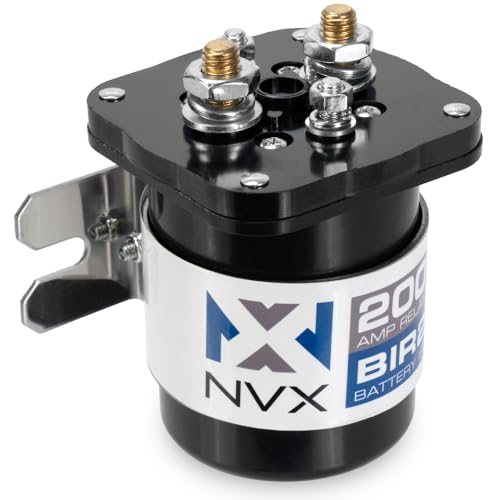
- 200A continuous, 300A surge rating
- Automatic relay for easy operation
- Works in cars, RVs, ATVs, UTVs, and boats
Best For: Moderate audio setups needing a simple relay isolator
High-Output Pick
RECOIL BRL500 500A Audio Isolator

- 500A continuous, 700A surge capacity
- No voltage drop to the second battery
- Waterproof design for harsh conditions
Best For: Serious mobile audio systems needing high current and efficient isolation
Smart Control Option
NVX XSBI200 Dual-Sensing Smart Relay

- Microprocessor-controlled dual-sensing operation
- 200A continuous, 300A surge rating
- Draws less than 1A when on
Best For: Stereo-focused systems that want automatic smart battery management
High-Current Starter Pick
Newdeli 200Amp Continuous Battery Isolator

- 200A continuous, 500A surge handling
- Automatic isolation when the engine is off
- Built for harsh, dust- and water-resistant use
Best For: dual-battery audio and utility setups needing a rugged 200A relay
Smart Relay Upgrade
NVX XSBI500 Dual Sensing Battery Isolator

- Microprocessor-controlled dual-sensing design
- 500A continuous and 700A surge handling
- Built to avoid voltage drop to the second battery
Best For: audio setups that need smart, high-current second-battery isolation
Value 200A Relay Choice
MaySpare 200 Amp Mobile Audio Isolator

- 200A continuous, 300A surge handling
- Automatic battery combine-and-isolate behavior
- No voltage drop to the second battery
Best For: budget-friendly dual-battery mobile audio and vehicle installs
High-Output Continuous Relay
500 Amp Battery Isolator for Mobile Audio
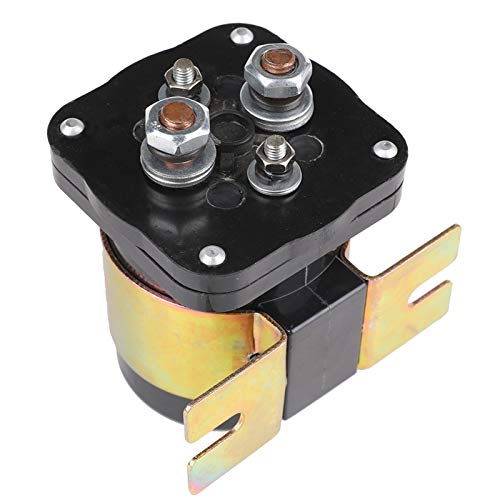
- 500A continuous at 12V
- 700A surge handling
- Helps prevent battery drain
Best For: Power-hungry car audio dual-battery systems
Automatic Relay Pick
NVX BIR500 500 Amp Battery Isolator

- 500A continuous, 700A surge
- Automatic operation
- Built for multi-vehicle use
Best For: Automatic isolation for dual-battery audio setups
Marine-Ready Value Option
Stinger SGP32 Dual Battery Isolator

- 200A continuous, 500A surge
- Water-resistant design
- 100,000-cycle lifespan
Best For: Moderate audio builds needing water resistance
Heavy-Duty Choice – Stinger SGP35 500-Amp Dual Battery Relay
If you need battery isolators for car audio that can handle serious current, the Stinger SGP35 is built for high-demand dual-battery setups. It supports a wide range of charging systems, offers water-resistant construction, and is rated for 500A continuous with 900A surges, making it a strong fit for demanding installs.
Best For: High-current car audio systems and vehicles that need a rugged dual-battery isolator.
Pros:
- 500A continuous current with 900A surge handling.
- Water-resistant phenolic plastic construction for marine, powersports, or off-road use.
- Compatible with any type of vehicle alternator or charging system.
- Built for secondary battery isolation to protect the primary battery from discharge.
Cons:
- Higher-capacity design may be more than needed for smaller audio systems.
- Socket mount format may require a more deliberate install plan.
The SGP35 stands out when reliability and current capacity matter more than simplicity. It is a practical pick for larger audio builds where preventing battery drain is a priority.
Budget-Friendly Relay – NVX BIR200 200A Battery Isolator
NVX BIR200 200 AMP Battery Relay Isolator and Relay for Cars, RVs, ATVs, UTVs, and Boats.
Check Price On AmazonThe NVX BIR200 is a straightforward option among battery isolators for car audio when you want a 200A relay-style solution. It handles moderate continuous load, supports automatic operation, and is designed for use across cars, RVs, ATVs, UTVs, and boats.
Best For: Moderate car audio builds that need a simple 200A battery relay isolator.
Pros:
- 200A continuous rating with 300A surge switching.
- Automatic operation for simple use.
- Wide vehicle fitment including cars, RVs, ATVs, UTVs, and boats.
- Panel mount design for installation flexibility.
Cons:
- Lower current rating than 500A alternatives.
- Basic relay design may not suit the most demanding audio upgrades.
For systems that do not need extreme current handling, the BIR200 covers the essentials well. It is a practical middle-ground choice for secondary battery isolation.
High-Output Pick – RECOIL BRL500 500A Audio Isolator
For larger audio systems, the RECOIL BRL500 is one of the more robust battery isolators for car audio in this group. It handles 500A continuous with 700A surge capacity, is described as waterproof, and is designed to stop the secondary battery from feeding back while the engine is off.
Best For: High-current mobile audio installs that need strong isolation and no voltage drop to the second battery.
Pros:
- 500A continuous and 700A surge handling.
- Designed to prevent power drain from the main battery when the engine is off.
- Does not create a voltage drop to the second battery like conventional isolators.
- Waterproof performance for use in harsh weather.
Cons:
- May be more capacity than smaller stereo setups require.
- Panel mount installation may not suit every vehicle layout.
The BRL500 focuses on preserving battery life while keeping a second battery ready for audio use. That makes it a strong match for serious mobile audio systems that need efficient power management.
Smart Control Option – NVX XSBI200 Dual-Sensing Smart Relay
NVX XSBI200 Dual Sensing Smart Relay Battery Isolator Microprocessor-Controlled 200 Amp
Check Price On AmazonThe NVX XSBI200 is a microprocessor-controlled option in battery isolators for car audio, aimed at users who want a smarter dual-battery setup. It is designed to dedicate a second battery to the stereo system, avoids voltage drop to that battery, and uses dual-sensing automatic control.
Best For: Car audio builds that want smart automatic battery isolation with a dedicated stereo battery.
Pros:
- Microprocessor-controlled dual-sensing automatic operation.
- 200A continuous rating with 300A surge handling.
- Does not create a voltage drop to the second battery like conventional isolators.
- Draws less than 1A when on.
Cons:
- 200A capacity is lower than 500A heavy-duty models.
- Surface mount design may require planning for placement.
This model is a good fit if you value smarter battery management over maximum amperage. It balances convenience, low draw, and automatic protection for a dedicated stereo battery.
High-Current Starter Pick – Newdeli 200Amp Continuous Battery Isolator
If you want battery isolators for car audio that can handle a serious secondary battery setup, this 12V Newdeli relay is built for straightforward automatic isolation. It combines batteries while the alternator is charging and separates them when the engine is off, helping protect your starter battery and reduce unnecessary drain.
Best For: Drivers, boat owners, and off-road users who need a 200-amp automatic isolator for multi-battery systems.
Pros:
- 200A continuous handling with 500A surge capacity.
- Automatic combine-and-isolate behavior based on charging status.
- Low draw of less than 1 amp when powered on.
- Dust-, water-, rust-, and corrosion-resistant housing for harsh environments.
Cons:
- Designed as a simple relay-style isolator, not a feature-rich smart controller.
- Surface/chassis mounting may not suit every install layout.
For buyers prioritizing durability and high current capacity, this Newdeli unit covers the essentials well. It is a practical fit for mobile audio and other dual-battery applications where reliable isolation matters more than extras.
Smart Relay Upgrade – NVX XSBI500 Dual Sensing Battery Isolator
NVX XSBI500 Microprocessor-Controlled 500 Amp, Dual Sensing Smart Relay Battery Isolator
Check Price On AmazonAmong battery isolators for car audio, the NVX XSBI500 stands out if you want a smart relay that is designed to support a dedicated stereo battery without the voltage drop associated with conventional isolators. Its microprocessor-controlled, dual-sensing design makes it a strong choice for cleaner system behavior in more demanding installs.
Best For: Car audio systems that need a 500-amp smart isolator for a second battery.
Pros:
- 500A continuous power handling with 700A surge capacity.
- Dual-sensing, microprocessor-controlled operation for automatic switching.
- Designed to avoid voltage drop to the second battery.
- Draws less than 1 amp when on.
Cons:
- Panel mount format may require a more planned installation.
- Higher-capacity design may be more than basic dual-battery users need.
If your priority is preserving voltage for a stereo battery, this NVX model is the most advanced option here. It is best suited to audio-focused systems where high current handling and smarter switching are worth the extra setup effort.
Value 200A Relay Choice – MaySpare 200 Amp Mobile Audio Isolator
If you need battery isolators for car audio that keep the install simple, this MaySpare 200 amp relay follows the classic automatic combine-and-separate approach. It joins batteries while charging and isolates them when the engine is off, while also avoiding the voltage drop common with conventional isolators.
Best For: Budget-conscious dual-battery installs in cars, RVs, ATVs, UTVs, and boats.
Pros:
- 200A continuous rating with 300A surge handling.
- Automatic isolation when the alternator stops charging.
- Does not create a voltage drop to the second battery.
- Wire diagram guidance is included in the product notes.
Cons:
- Lower surge rating than some higher-end 200A and 500A competitors.
- Basic relay design offers fewer advanced features than smart isolators.
This MaySpare model is a practical pick when you want the core benefits of a battery isolator without moving into a pricier smart-relay category. It looks well matched to straightforward mobile audio and utility setups where dependable automatic switching is the main goal.
High-Output Continuous Relay – 500 Amp Battery Isolator for Mobile Audio
If you need battery isolators for car audio that can move serious current, this 12V 500A relay is built for high-demand dual-battery setups. It’s aimed at systems where the second battery powers audio, visual navigation, or other accessories, while helping keep the primary battery from draining when the vehicle is off.
Best For: High-current car audio and other dual-battery setups that need continuous power handling.
Pros:
- 500A continuous rating at 12V with 700A surge capacity
- Designed to isolate the second battery without voltage drop
- Helps reduce battery drain when the system is powered down
- Built with durable materials and easy-start operation
Cons:
- Manual operation mode may not suit users wanting automatic switching
- Chassis-mount design may require a more involved install than simple plug-and-play units
This is a strong pick if your priority is raw current handling for car audio and related accessories. Its main appeal is straightforward: keep the secondary battery isolated while still delivering power on demand when the system needs it.
Automatic Relay Pick – NVX BIR500 500 Amp Battery Isolator
NVX BIR500 500 AMP Battery Relay Isolator and Relay for Cars, RVs, ATVs, UTVs, and Boats.
Check Price On AmazonAmong battery isolators for car audio, this NVX unit stands out for users who want an automatic relay with high current capability. It’s rated for 500A continuous at 12V, with 700A surge handling, making it suitable for systems that need dependable dual-battery isolation in vehicles, RVs, ATVs, UTVs, and boats.
Best For: Automatic dual-battery isolation in car audio and multi-vehicle setups.
Pros:
- 500A continuous rating with 700A surge support
- Automatic operation for easier system management
- Works across cars, RVs, ATVs, UTVs, and boats
- Designed with a normally open contact type
Cons:
- Lower minimum switching voltage may not fit every install preference
- Panel mount format may require planned placement
If you want an isolator that handles substantial current without requiring manual control, this model is an easy fit. It keeps the focus on practical dual-battery use while offering the kind of capacity that suits serious audio and accessory loads.
Marine-Ready Value Option – Stinger SGP32 Dual Battery Isolator
For battery isolators for car audio, the Stinger SGP32 is a practical option if you want reliable dual-battery isolation plus a water-resistant design. It handles up to 200A continuous current and up to 500A surges, making it a solid match for powering a stereo system or other accessories while protecting the main battery from discharge.
Best For: Car audio systems that need a water-resistant isolator with moderate continuous current.
Pros:
- 200A continuous current with 500A surge capacity
- Water-resistant construction for marine and powersports use
- Works with any type of vehicle alternator or charging system
- 100,000 mechanical cycle life for long-term use
Cons:
- Lower continuous current rating than 500A units
- May be less suited to very large, high-demand audio builds
This model makes sense when durability and environmental resistance matter as much as isolation performance. It won’t match the biggest current-hungry systems, but it offers a balanced setup for many car audio installations.
How We Picked These Battery Isolators for Car Audio
We focused on current capacity, compatibility with 12V mobile audio systems, and practical features that matter in real installs. That includes continuous-duty rating, dual-sensing or smart relay operation, and water-resistant construction for vehicles that see harsh conditions.
We also prioritized options that fit common use cases, from moderate systems that need 200-amp support to heavy-duty builds that benefit from 500-amp capacity.
Quick Comparison
If you’re choosing between Battery Isolators for Car Audio, the simplest split is 200 amp versus 500 amp. A 200-amp model is usually a strong fit for smaller or mid-size audio upgrades, while 500-amp units are better suited to larger amplifiers, higher draw, or more demanding start-up loads.
Smart or dual-sensing relays are useful when you want automatic charging behavior without extra manual switching. Traditional high-current relay isolators remain a solid choice when you want straightforward, rugged operation.
Key Buying Factors for Battery Isolators for Car Audio
Amperage Rating
Match the isolator’s amp rating to the total electrical demand of your system. Undersizing can cause voltage drop, heat buildup, or premature failure.
Continuous Vs. Intermittent Duty
For audio builds, continuous-duty units are generally the safer pick because they are designed to stay engaged during normal operation rather than short bursts only.
Smart Sensing Features
Dual-sensing or microprocessor-controlled models can simplify charging management by responding to voltage changes automatically. That can be especially helpful in vehicles with multiple batteries.
Environment and Mounting
If your vehicle sees moisture, dust, or vibration, look for water-resistant housings and durable construction. This matters for marine, ATV, UTV, and off-road setups as much as it does for cars.
Who Should Buy Which Battery Isolators for Car Audio?
If you run a moderate car audio system and want a dependable, easy-to-understand solution, a 200-amp isolator is often the best starting point. If you’ve added high-output amps, multiple batteries, or you expect heavy electrical load, move up to a 500-amp model.
Drivers who want automatic charging behavior should look at smart relay options. Builders who value simplicity and ruggedness may prefer a standard relay-style isolator. In short, the best Battery Isolators for Car Audio are the ones that match your power demand, vehicle type, and installation goals—not just the highest amp number on the box.