Choosing the right amplifier can make door speakers sound cleaner, louder, and more dynamic without wasting space or power. Class D designs are especially popular because they stay efficient and compact.
Below, we focus on the most practical picks for different setups, from car audio to compact home systems, so you can match the amp to your speakers and goals.
Best 10 Class D Amplifiers for Door Speakers Picks for 2026
Best for Multi-Speaker Setups
Taramps TS 400x4 4-Channel Amp
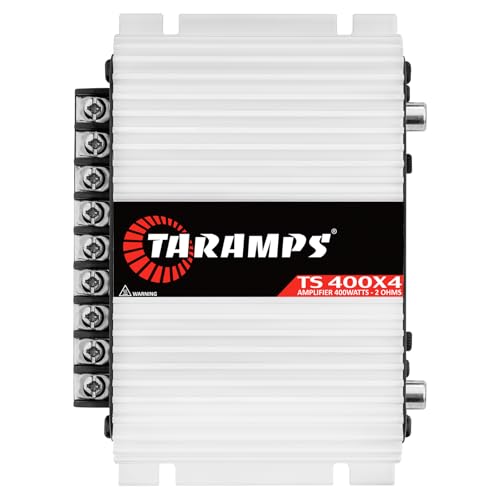
- 400W RMS total across 4 channels
- Bridging support for flexible installs
- Compact full-range Class D design
Best For: Drivers who want a compact 4-channel amp for door speakers and versatile full-range setups.
Best Compact Power Pick
Fosi Audio TB10D 2-Channel Amp

- TPA3255 Class D design with strong output potential
- Bass and treble controls for easy tuning
- Compact size suits desks, shelves, and small audio setups
Best For: Passive speaker users who want a small, adjustable Class D amplifier for simple stereo or bass shaker setups.
Best Multichannel Power
Taramps TS 1200x4 4-Channel Amp

- 1200W RMS total for strong door-speaker power
- 4-channel layout with bridging and full-range tuning
- High-level and RCA inputs for flexible installs
Best For: Drivers who want a powerful 4-channel amp for door speakers and mixed speaker systems.
Best Compact Class D
Fosi Audio V1.0G 2-Channel Mini Amp

- TPA3116D2 Class D amp with efficient, cool-running output
- Includes a power adapter for easier setup
- Quiet, compact design with speaker protection
Best For: Budget-conscious buyers who want a small, efficient stereo amp for simple speaker upgrades.
Best for Subwoofer Power
Orion Cobalt CBA2000.1D 1-Channel Amp

- 500W RMS at 1 ohm with 1/2/4-ohm stability
- Low-pass, bass boost, and subsonic controls
- Remote bass knob included for quick adjustments
Best For: Drivers building a bass-focused system who want an efficient mono amp with tuning controls.
Best for Subwoofer Expansion
AIYIMA A07 Premium TPA3255 Amp

- Clean, efficient TPA3255 Class D amplification
- Pre-out supports subwoofer and active speaker setups
- Compact, upgrade-friendly design for small systems
Best For: Compact passive speaker setups that may grow into a 2.1 system.
Best for Power-Hungry Door Speakers
Recoil DI550.4 4-Channel Class-D Amp

- 130W x 4 at 2 ohms for strong door-speaker output
- Compact 4-channel design fits easier in small installs
- Flexible crossover and EQ controls simplify tuning
Best For: Drivers upgrading door speakers who want a compact, flexible 4-channel amp with plenty of output.
Best for DIY Car Audio
Clyxgs TPA3116D2 2x120W Amp Board

- Efficient TPA3116D2 Class D design
- Built-in protection circuits for safer use
- Compact dual-channel board for 12-26V systems
Best For: DIY users wiring a compact stereo amp for car door speakers or small audio projects.
Best Heavy-Duty Pick
AUDIOZERONE ZE1000.1 2000W Monoblock

- 1000W RMS at 1 ohm for bass-focused setups
- Class D efficiency helps keep heat and waste down
- Compact monoblock with protection circuits
Best For: Bass-first drivers who need a compact, efficient subwoofer amplifier.
Best for Multi-Speaker Setups – Taramps TS 400×4 4-Channel Amp
If you want one compact amp that can power front and rear doors cleanly, the Taramps TS 400×4 is a practical pick among class d amplifiers for door speakers. It delivers 400 watts RMS total, gives you four channels to work with, and can be bridged when a different layout makes more sense. The fixed crossover and gain control also help keep tuning straightforward for everyday car audio installs.
Best For: Drivers who want a small, versatile 4-channel amp for door speakers, full-range setups, or simple bridged installs.
Pros:
- 4 channels with 100 watts RMS each at 2 ohms
- Bridging support adds flexibility for different speaker layouts
- Fixed crossover and gain control simplify setup
- Compact design with short-circuit protection and LED indicator
Cons:
- Fixed crossover is less adjustable than variable models
- Best results depend on matching impedance and speaker power correctly
- Not the strongest choice if you need dedicated subwoofer-heavy output
For buyers comparing class d amplifiers for door speakers, this Taramps model stands out for its mix of size, flexibility, and usable power. It is a smart fit when you need a multi-channel amp that can handle door speakers without taking over the install.
Best Compact Power Pick – Fosi Audio TB10D 2-Channel Amp
If you want class d amplifiers for door speakers with real flexibility, the Fosi Audio TB10D is a compact stereo amp that brings plenty of headroom for passive setups. Its TPA3255-based design, RCA input, and bass/treble controls make it easy to tune for a small home system, garage rig, or other space where simple, strong amplification matters.
Best For: Buyers who want a small, adjustable Class D amp for passive speakers, bass shakers, or a basic two-channel audio setup.
Pros:
- Up to 300W per channel with a TPA3255 Class D chip
- Bass and treble knobs make quick sound adjustments easy
- Compact footprint works well on desks, shelves, or in tight audio spaces
- Simple RCA input and passive speaker output keep setup straightforward
Cons:
- Requires passive speakers and an external source
- No advanced inputs or built-in streaming features
- Power claims can look high versus real-world use in smaller systems
For shoppers comparing class d amplifiers for door speakers, the TB10D stands out more for clean control and compact practicality than for extra features. It is a smart pick if you want a small amp that can power a simple stereo setup without taking up much room.
Best Multichannel Power – Taramps TS 1200×4 4-Channel Amp
If you want a compact amp that can run front and rear speakers with real headroom, the Taramps TS 1200×4 is a strong pick for class d amplifiers for door speakers. Its 4-channel design, 2-ohm stability, and full-range crossover controls make it flexible enough for mixed speaker setups without taking up much space.
Best For: Drivers who want a powerful 4-channel amp for door speakers, mids, and tweeters in a clean all-in-one setup.
Pros:
- 1200W RMS total output gives each channel plenty of power for daily listening.
- Full-range, HPF, and LPF options make tuning easier for different speaker setups.
- High-level and RCA inputs add flexibility for factory or aftermarket head units.
- Bridging support lets you adapt the amp to different system layouts.
Cons:
- Requires proper power wiring and a recommended 60A fuse or breaker.
- Not the simplest choice if you only need a basic two-speaker install.
For buyers comparing class d amplifiers for door speakers, this Taramps stands out for its output, tuning options, and easy system expansion. It is a practical fit when you want loud, clean speaker power without moving to a larger multi-piece setup.
Best Compact Class D – Fosi Audio V1.0G 2-Channel Mini Amp
If you need a simple, efficient option for class d amplifiers for door speakers, the Fosi Audio V1.0G is a strong compact pick. Its TPA3116D2 Class D design keeps heat and power loss low, while the included power supply makes it easy to get up and running for small home audio setups.
Best For: Budget-minded buyers who want a small, efficient stereo amp for easy speaker upgrades and near-silent operation.
Pros:
- Efficient TPA3116D2 Class D chip with low heat output
- Includes power supply for a quicker setup
- Quiet operation with built-in speaker protection
- Compact aluminum chassis fits tight spaces well
Cons:
- Best suited to modest power needs, not big room-filling systems
- Limited feature set compared with larger stereo receivers
For shoppers comparing class d amplifiers for door speakers, this model stands out for its size, efficiency, and easy installation. It is a practical choice when you want clean stereo power without extra complexity.
Best for Subwoofer Power – Orion Cobalt CBA2000.1D 1-Channel Amp
If you need a mono amp that can deliver strong, controlled bass, the Orion Cobalt CBA2000.1D is a practical pick for systems that prioritize subwoofer output. It’s a solid option to consider when comparing class d amplifiers for door speakers too, but its real strength is powering subs with efficient, low-end focused performance.
Best For: Drivers building a subwoofer setup who want a 1-ohm-stable Class D amplifier with bass tuning controls and included remote knob.
Pros:
- 500W RMS at 1 ohm, with 1/2/4-ohm stability for flexible wiring
- Adjustable low-pass filter, bass boost, and subsonic control
- Remote bass knob included for easy level changes from the cabin
- MOSFET power supply and protection circuitry for reliable operation
Cons:
- Designed for subs, not a full-range door speaker system
- Max power rating can be misleading versus real RMS output
- Single-channel layout limits it to bass-duty applications
Overall, this Orion mono amp makes the most sense if your priority is clean, adjustable bass rather than a full-range upgrade. For shoppers comparing class d amplifiers for door speakers, it’s better viewed as a dedicated sub amp with enough efficiency and control to anchor a compact audio build.
Best for Subwoofer Expansion – AIYIMA A07 Premium TPA3255 Amp
If you want one of the most flexible class d amplifiers for door speakers, the AIYIMA A07 is a strong pick for compact systems that need clean power, low heat, and a simple setup. Its TPA3255-based design is well suited to passive speakers, and the pre-out makes it easy to build out a 2.1 desktop or small home audio setup.
Best For: Buyers who want a compact stereo amp with pre-out support for passive speakers and a subwoofer.
Pros:
- TPA3255 Class D platform delivers efficient, quiet operation with plenty of headroom
- 3.5 mm pre-out makes subwoofer or active speaker integration easier
- Compact metal chassis fits desktops, bookshelves, and small audio racks
- Upgradeable op-amp design appeals to more hands-on audio users
Cons:
- Best performance depends on using a stronger external power supply
- No wireless or streaming features built in
- Power claims can be optimistic compared with real-world speaker setups
For shoppers comparing class d amplifiers for door speakers, this model stands out more for flexibility and sound quality than for car-audio-specific features. It’s a practical choice if you want a compact amp that can power passive speakers and expand into a fuller system later.
Best for Power-Hungry Door Speakers – Recoil DI550.4 4-Channel Class-D Amp
If you want one amp that can wake up a set of door speakers without taking up much space, the Recoil DI550.4 is a strong contender among class d amplifiers for door speakers. It delivers solid power, flexible tuning, and bridgeable channels, making it a practical fit for everyday sound upgrades.
Best For: Drivers who want a compact 4-channel amp with enough clean output for louder, more dynamic door-speaker setups.
Pros:
- Up to 130W x 4 at 2 ohms for strong door-speaker performance
- Flexible tuning with gain, LPF, HPF, crossover, and bass EQ
- Bridgeable design adds system-building versatility
- Compact chassis makes installation easier in tight spaces
Cons:
- Best results depend on proper gain setup and speaker matching
- Not the right pick if you need extreme high-end audiophile refinement
Overall, the DI550.4 stands out for shoppers comparing class d amplifiers for door speakers because it balances output, control, and size well. It is a smart choice if you want a clean, compact amp that can power front and rear speakers with room to grow.
Best for DIY Car Audio – Clyxgs TPA3116D2 2x120W Amp Board
If you want an easy way to power door speakers, this Clyxgs TPA3116D2 board is a practical pick among class d amplifiers for door speakers. It runs on DC 12-26V, uses an efficient TPA3116D2 chip, and is compact enough for car audio, computer speakers, or a simple home theater DIY build.
Best For: DIY buyers who want a compact stereo amplifier board for car door speakers, bench testing, or basic home audio projects.
Pros:
- High-efficiency Class D design with low idle loss
- Built-in protection for overvoltage, undervoltage, overheating, DC, and short circuit faults
- Compact board size with dual-channel stereo output
- Works with a wide DC 12-26V power range
Cons:
- Requires a separate power supply and wiring setup
- Not a plug-and-play car stereo upgrade
- Real-world output depends on voltage, load, and cooling
For DIY installers, this is a straightforward way to add efficient amplification without taking up much space. It makes sense for class d amplifiers for door speakers when you want a simple stereo board with protection features, but it is best suited to users who are comfortable handling wiring and power requirements.
Best Heavy-Duty Pick – AUDIOZERONE ZE1000.1 2000W Monoblock
If you want one of the more practical class d amplifiers for door speakers only when you also need real bass-duty power, the AUDIOZERONE ZE1000.1 is built as a compact monoblock that focuses on efficiency and output. Its 1-ohm stability, low-pass crossover, and MOSFET power supply make it a straightforward choice for subwoofer setups where size, heat control, and clean low-end performance matter.
Best For: Drivers building a compact subwoofer amp setup who want efficient Class D power and simple tuning.
Pros:
- Up to 1000W RMS at 1 ohm for strong bass output
- Class D design helps reduce heat and power loss
- 1-ohm stable with thermal, overload, and short-circuit protection
- Compact 11″ x 6.9″ x 2″ footprint makes placement easier
Cons:
- Monoblock design is for subwoofers, not full-range door speakers
- No built-in multi-channel support for complete system upgrades
- Power claims may require careful matching to your wiring and sub load
For buyers comparing class d amplifiers for door speakers, this model is really better viewed as a bass amplifier rather than a speaker-channel solution. It makes the most sense if you’re prioritizing compact, efficient sub power over a full-range system.
Best for Power Bridging – AIYIMA A07 MAX 2-Channel Class D Amp
If you want compact power and flexible wiring, the AIYIMA A07 MAX is a strong pick among class d amplifiers for door speakers. It can run as a 2-channel stereo amp or switch into bridged mono mode, giving you room to scale a simple setup without moving to a much larger unit.
Best For: Buyers who want a small, efficient amplifier with extra headroom for passive speakers, desktop systems, or door-speaker-style installs that may benefit from bridging.
Pros:
- TPA3255 Class D design with 300W x 2 stereo output or bridged mono operation
- Compact size with included 36V power adapter for an easier setup
- 3.5mm line output lets you link a second unit for a bigger system
- Solid cooling layout and low-distortion hi-fi component mix
Cons:
- No phono input, so vinyl users need an external preamp
- Not a full-featured receiver with EQ, streaming, or DSP
- Power claims are ambitious, so real-world output depends on speaker load and power supply
For shoppers comparing class d amplifiers for door speakers, this model stands out more for flexibility and compact power than for fancy extras. It makes the most sense if you want a clean, efficient amp that can grow with your system.
How We Picked These Class D Amplifiers for Door Speakers
We focused on real-world factors that matter most: clean power output, channel count, impedance stability, bridgeable design options, input flexibility, and overall suitability for door speakers. We also favored models that balance efficiency with manageable heat output and straightforward installation.
Quick Comparison: What Matters Most
When comparing Class D Amplifiers for Door Speakers, the biggest differences usually come down to whether the amp is built for car audio or home audio, how much continuous power it can deliver, and whether it can run 2-ohm or 4-ohm loads safely. Multi-channel amps are ideal for front-and-rear door speaker systems, while stereo units fit simpler two-speaker setups.
Key Buying Factors for Class D Amplifiers for Door Speakers
Match RMS Power, Not Peak Power
Use speaker RMS ratings as your baseline. An amplifier that delivers power too far below the speaker’s rating may sound underwhelming, while one that is excessively strong can raise the risk of distortion or damage if gains are set poorly.
Choose the Right Channel Layout
For two door speakers, a 2-channel amp is often enough. For four doors or front-and-rear expansion, a 4-channel model is usually the better fit. If you want flexibility later, look for bridgeable channels.
Check Impedance Compatibility
Door speakers commonly run at 4 ohms, but some systems vary. Make sure the amplifier is stable at your speaker load, especially if you plan to wire multiple speakers per channel or bridge outputs.
Prioritize Clean Signal and Controls
Useful features include crossover controls, gain adjustment, and both RCA and high-level inputs when available. These help you integrate the amp properly and avoid harsh or muddy sound.
Think About Installation Space and Heat
Compact Class D amps are easier to place under seats, behind panels, or in tight media setups. Even efficient amps still need airflow, so avoid mounting them where heat can build up.
Who Should Buy Which Class D Amplifiers for Door Speakers?
If you want a straightforward upgrade for factory door speakers, a compact 2-channel Class D amp is usually the easiest path. If you are building a fuller car audio system, a 4-channel model gives more control and scalability. For home audio or desktop use, smaller Class D stereo amplifiers can be the better choice, especially when speaker efficiency is decent and space is limited.
In short, the best choice depends on your speaker load, installation space, and whether you need a simple power boost or a more flexible system foundation.