If you want a quieter cabin and less heat soaking through the firewall, the right material can make a noticeable difference. The best options reduce vibration, block radiant heat, and improve overall comfort without adding unnecessary complexity.
This roundup focuses on practical choices for car sound deadening for firewall heat and noise, with options suited to different budgets, coverage needs, and installation priorities.
Best 10 Car Sound Deadening for Firewall Heat and Noise Picks for 2026
Reflective 3-Layer Thermal Wrap
Abahub 236 mil Hood & Firewall Insulation

- 3-layer foil, foam, and adhesive design
- Helps reflect heat and reduce vibration
- Cuts and fits firewalls, hoods, and more
Best For: lightweight firewall and hood heat control
Heavy-Duty Butyl Barrier

- Thick 80mil 3-layer butyl design
- Reflective foil and butyl help with heat and vibration
- Waterproof, durable, peel-and-stick install
Best For: thicker all-around noise and vibration damping
2-in-1 Heat Blocker
Siless LinerPRO 200 mil Foam Deadener

- Two-layer foam and mastic composite
- Waterproof closed-cell PE foam construction
- Designed to block radiant heat and vibration
Best For: waterproof heat insulation with sound control
Compact Hood Shield

- Fiberglass-faced aluminum foil foam mat
- Targets engine, exhaust, and sunlight heat
- Compact 40 x 24 inch coverage for small jobs
Best For: small-area hood and firewall heat shielding
Firewall Heat Shield Foam

- 36 sqft roll of 4 mm closed-cell foam
- Blocks radiant heat and reduces noise
- Odorless, lightweight, DIY-friendly
Best For: lightweight firewall and panel heat/noise control
Aluminum Foil Firewall Insulation

- 394 mil thick with 10.8 sqft coverage
- Targets firewalls, engine bays, and hoods
- Waterproof, odorless, self-adhesive foam
Best For: targeted firewall and engine-bay heat insulation
Butyl Sound Deadener Roll
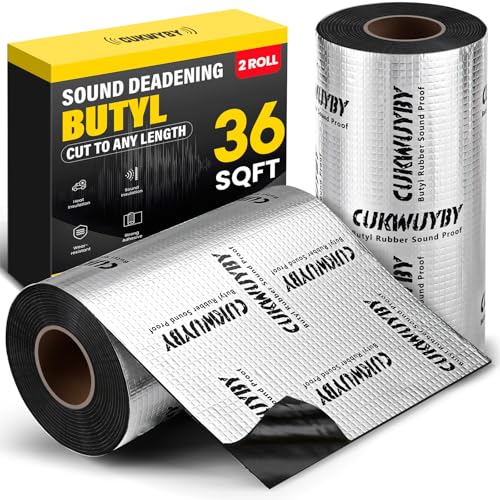
- 36 sqft roll for large panels
- Butyl/aluminum layer reduces noise and vibration
- Waterproof, odor-free, self-adhesive
Best For: broad coverage on doors, floors, roofs, and similar panels
Firewall Heat & Lightweight Coverage Pick
197 Mil Heat & Sound Mat for Firewalls

- 197 mil closed-cell foam construction
- Claims to block 98% of radiant heat
- 5.35 sqft, odorless, waterproof sheets
Best For: Targeted firewall and engine-bay heat protection
Full-Car Damping Value Pick
80 Mil Butyl Sound Deadener Kit

- Pure butyl, odorless, asphalt-free build
- 80 mil triple-layer design reflects 90% heat
- 36 sqft kit sized for larger coverage jobs
Best For: Full-car noise and heat reduction with simple install
High-Coverage Foam Insulation Pick
200 Mil PE Foam Heat Shield Roll

- 200 mil closed-cell PE foam insulation
- 36.16 sqft roll format for custom cuts
- Foil finish resists oil, water, heat, UV
Best For: Custom-fit firewall and interior heat insulation
Reflective 3-Layer Thermal Wrap – Abahub 236 mil Hood & Firewall Insulation
If you want car sound deadening for firewall heat and noise, this Abahub roll is built as a simple all-in-one option. Its 3-layer construction combines reflective foil, dense foam, and adhesive backing to help cut engine-bay heat and reduce vibration on firewalls, hoods, and other metal panels.
Best For: Drivers who want a lightweight, easy-to-trim firewall and hood insulation roll that helps with both radiant heat and road noise.
Pros:
- Reflective foil plus dense foam helps block radiant heat and dampen vibration.
- Self-adhesive backing is designed to bond securely to metal surfaces.
- Flexible material can be cut and fitted around curves and tight areas.
- Works on firewalls, hoods, trunks, wheel wells, and floor pans.
Cons:
- Coverage is 16 sq ft, which may be modest for larger installs.
- Best suited to panel coverage rather than heavy-duty barrier builds.
This is a practical choice if you want a user-friendly insulation sheet that tackles both heat and noise without adding much complexity. The foam-and-foil layout makes it especially useful where firewall temperature management matters.
Heavy-Duty Butyl Barrier – 80mil Car Sound Deadening Mat
For car sound deadening for firewall heat and noise, this 80mil butyl mat is aimed at buyers who want a thicker, more substantial layer. The 3-layer build uses reinforced aluminum foil, a butyl rubber core, and strong adhesive backing to reduce vibration while also helping with heat reflection.
Best For: DIY installers who want a thick butyl mat with broad coverage for doors, trunks, and other vibration-prone panels.
Pros:
- 80mil thickness gives it a heavier-duty profile than thinner mats.
- 8-wire aluminum foil is designed to reflect heat while the butyl core absorbs vibration.
- Waterproof and wear-resistant construction is built for long-term use.
- Peel-and-stick installation is described as straightforward and beginner-friendly.
Cons:
- At 36 sq ft, it may still require multiple sheets for larger vehicles.
- Primarily a noise and vibration solution, not a dedicated firewall thermal blanket.
This mat is a strong fit if you want a more traditional butyl deadener with enough thickness to feel substantial. It is especially appealing when your priority is cutting road and engine vibration across larger interior panels.
2-in-1 Heat Blocker – Siless LinerPRO 200 mil Foam Deadener
If your goal is car sound deadening for firewall heat and noise, Siless LinerPRO is built around a two-layer foam-and-mastic design. It combines closed-cell PE foam with a dense backing layer to target both thermal insulation and vibration reduction, with waterproof construction that suits engine-adjacent use.
Best For: Buyers who want a waterproof, closed-cell insulation layer that emphasizes radiant heat blocking along with sound control.
Pros:
- Two-layer composite is designed to tackle both sound vibrations and heat insulation.
- Closed-cell polyethylene foam is waterproof and does not absorb moisture.
- Claims to block 98% of radiant heat transfer for engine and summer heat.
- Flexible self-adhesive sheets are made for easier installation.
Cons:
- At 5mm thick, it is more of an insulation layer than a bulky barrier.
- Coverage is 36 sq ft, so larger jobs may need careful planning.
This product makes sense if you want a more insulation-focused solution that still addresses vibration. Its waterproof, odor-free design and heat-blocking emphasis make it especially useful in areas where moisture resistance matters.
Compact Hood Shield – uxcell 394mil Heat Sound Mat
For car sound deadening for firewall heat and noise in a smaller area, this uxcell mat is a compact option aimed at hood and engine-bay protection. Its fiberglass surface and aluminum foil foam construction are designed to insulate against engine and exhaust heat while also helping reduce noise.
Best For: Drivers needing a smaller heat-and-sound insulating pad for hood, firewall, or engine-bay coverage.
Pros:
- Heatproof construction helps block engine and exhaust heat from reaching the cabin.
- Designed to reduce sound transmission and absorb some noise.
- Useful for keeping heat in during winter and out during summer.
- Compact 40 x 24 inch size is easy to place in targeted spots.
Cons:
- Coverage is only about 6 to 6.5 sq ft, so it is not ideal for large jobs.
- Best suited to specific panels rather than full-vehicle soundproofing.
This is a targeted solution when you want to treat a single hood or firewall area without buying a large roll. It focuses more on heat shielding first, with sound control as a useful secondary benefit.
Firewall Heat Shield Foam – 4mm Closed-Cell Foam, 36 sqft
If you want car sound deadening for firewall heat and noise without adding a heavy, complicated layer, this 4 mm closed-cell foam is built for broad, DIY-friendly coverage. It combines sound reduction with thermal blocking, and the notes specifically call out use on firewalls, hoods, trunks, and other vehicle areas where heat and noise are both concerns.
Best For: Drivers who want a lightweight, odorless foam option for firewall and general cabin heat/noise control.
Pros:
- 4 mm closed-cell foam with 36 sqft coverage for larger jobs
- Claims to block 98% of radiant heat transfer
- Odorless, lightweight, and safe for DIY installation
- Can be cut to size and used on firewalls, hoods, trunks, and doors
Cons:
- Notes say it is not suitable for floors or some other areas
- Best fit depends on careful application against the vehicle surface
Overall, this is a practical pick if your priority is a flexible foam barrier that can handle both heat and sound on the firewall and surrounding panels. The large roll and simple install make it appealing for general use, but you should match the application area to the product guidance.
Aluminum Foil Firewall Insulation – 394 Mil, 40×40 Sheet
For car sound deadening for firewall heat and noise in a more compact sheet format, this 394 mil insulation mat is aimed at high-heat vehicle areas. The product notes mention firewalls, engine compartments, hoods, trunks, and wheel arches, so it fits buyers who want a thermal barrier that also helps cut vibration.
Best For: Drivers needing a thick, self-adhesive sheet for firewall and engine-bay heat insulation.
Pros:
- 394 mil nominal thickness with 10.8 sqft coverage
- Designed to block 98% of radiant heat transfer
- Works in firewall, hood, engine compartment, and trunk applications
- Waterproof, odorless, and compressible closed-cell foam construction
Cons:
- Smaller coverage area than the larger roll-format options
- Best suited to targeted installs rather than full-vehicle coverage
This is a solid choice when the firewall or engine bay needs focused heat shielding more than broad coverage. The thickness and foil finish make it especially relevant for hotter zones, but the sheet size means you’ll want to plan the layout carefully.
Butyl Sound Deadener Roll – 36 sqft Heat and Noise Mat
If your main goal is car sound deadening for firewall heat and noise with a straightforward peel-and-stick roll, this butyl and aluminum composite is designed for broad panel coverage. The notes highlight strong noise reduction, vibration damping, and heat insulation, making it a sensible all-around choice for daily driving or audio upgrades.
Best For: Buyers who want a versatile butyl mat for larger panels and general cabin quieting.
Pros:
- 36 sqft roll format supports large-area coverage
- Butyl and aluminum composite helps block noise and reduce vibration
- Provides heat insulation from engine and outside sources
- Waterproof, temperature-resistant, odor-free, and self-adhesive
Cons:
- The notes emphasize large panels more than firewall-specific fitment
- Roll format may require more trimming for tight spaces
This is the most general-purpose option in the group, especially if you want one mat that can cover multiple panels while helping with both heat and sound. It should work well where you need broad, durable coverage, but it’s less specialized than the thicker firewall-focused sheet.
Firewall Heat & Lightweight Coverage Pick – 197 Mil Heat & Sound Mat for Firewalls
If you want car sound deadening for firewall heat and noise, this 197 mil mat is built for basic but useful thermal and vibration control in smaller coverage areas. It’s designed to block radiant heat, stay odor-free, and handle a wide temperature range, making it a practical choice for firewalls, hoods, and other hot spots where you want easier installation in manageable sheets.
Best For: Drivers who need compact firewall and engine-bay heat protection with simple sheet-by-sheet installation.
Pros:
- 197 mil thickness with a closed-cell foam construction for heat insulation and vibration damping
- Claims to block 98% of radiant heat transfer for hotter areas like firewalls and engine compartments
- Waterproof, lightweight, and odorless, so it won’t absorb moisture
- Handy 15.7 x 9.8 inch sheets can be cut and installed with or without a roller
Cons:
- 5.35 sqft coverage is limited for larger vehicle projects
- Not a full-car solution if you need broad cabin or floor coverage
Overall, this is a focused insulation mat for buyers who care more about targeted firewall heat reduction than maximum coverage. The smaller sheet format also makes it easier to fit into tighter automotive areas without much hassle.
Full-Car Damping Value Pick – 80 Mil Butyl Sound Deadener Kit
For car sound deadening for firewall heat and noise, this 80 mil butyl kit is aimed at buyers who want a larger, more complete coverage approach. The pure butyl construction is odorless, the foil layer is designed to reflect heat, and the 36 sqft kit is sized to cover common areas like doors, trunks, and other panels without needing to piece together multiple packages.
Best For: Drivers who want a full-car sound and heat control kit with easy, beginner-friendly installation.
Pros:
- Pure butyl rubber with no asphalt fillers and no unpleasant odor
- 80 mil triple-layer design combines vibration absorption, heat reflection, and strong adhesive bonding
- 36 sqft coverage is positioned as enough for 4 doors plus a trunk floor
- Embossed foil pattern acts as an installation indicator when rolled flat
Cons:
- Coverage is generous, but buyers with only a small firewall section may not need this much material
- Primarily a damping and heat-shielding sheet, not a dedicated molded firewall barrier
This is the most all-around option in the group if you want one kit that can handle noise, vibration, and heat in a broader install. Its size and adhesive setup make it especially appealing for first-time installers who want straightforward results.
High-Coverage Foam Insulation Pick – 200 Mil PE Foam Heat Shield Roll
If you’re comparing car sound deadening for firewall heat and noise, this 200 mil foam roll stands out for its larger coverage and heat-focused insulation design. It uses closed-cell PE foam with aluminum foil to resist oil, water, heat, and UV radiation, while the roll format makes it easier to cut into custom shapes for firewalls, hoods, roofs, and other sections.
Best For: Buyers who want a roll-format insulation layer for custom-fit firewall and interior projects.
Pros:
- Thick 200 mil / 5 mm closed-cell PE foam for insulation and dampening
- 36.16 sqft roll offers broad coverage for multiple vehicle areas
- Aluminum foil finish is rated to resist oil, water, heat, and UV radiation
- Roll-shipped format has no creases and can be cut to fit custom spaces
Cons:
- Foam insulation is not the same as a butyl damping layer for panel vibration control
- Installers must avoid covering chassis wiring or air holes
As a high-coverage insulation roll, this product is best when you want one material that can be trimmed for specific areas instead of pre-cut sheets. It’s a strong fit for buyers focused on heat shielding first, with sound reduction as part of the package.
How We Picked the Best Car Sound Deadening for Firewall Heat and Noise
We looked for materials that balance heat resistance, vibration control, coverage, and install practicality. For firewall use, the most important traits are strong adhesion, stable construction, and enough thickness or density to help with both noise and thermal transfer.
We also favored products that can work in tight under-dash and engine-bay-adjacent areas, since firewall installs often involve limited space and tricky contours.
Quick Comparison
In general, butyl-based mats are best for reducing panel vibration and road noise, while closed-cell foam and heat shield-style layers are better at resisting radiant heat. Many buyers get the best results by pairing a vibration-damping layer with a heat-insulating layer rather than relying on one material alone.
Key Buying Factors for Car Sound Deadening for Firewall Heat and Noise
Heat Resistance
Choose materials designed to handle elevated temperatures near the engine bay. For firewall applications, heat performance matters as much as noise reduction, especially on vehicles that see long commutes, towing, or hot climates.
Thickness and Density
Thicker materials can improve insulation, but they may also create fitment issues around pedals, wiring, brackets, and trim. Dense butyl mats are excellent for damping vibration, while foam-style products are often better for thermal buffering.
Coverage and Fitment
Measure the firewall area before buying. A larger roll can reduce seams and waste, while smaller sheets may be easier for targeted coverage around problem spots. Complex firewall shapes may benefit from flexible, easy-to-cut material.
Adhesion and Durability
Look for products that stay put over time, especially in areas exposed to heat cycling. Weak adhesive can cause edge lifting, which reduces both performance and long-term reliability.
Who Should Buy Which Car Sound Deadening for Firewall Heat and Noise?
If your main concern is drivetrain and road noise, a butyl sound deadening mat is usually the best starting point. If cabin heat is the bigger issue, prioritize a heat-insulating foam or shield-style layer. For the best overall result on Car Sound Deadening for Firewall Heat and Noise, choose a layered approach: damping on the metal, then insulation on top where space allows.
Budget shoppers should focus on coverage and basic damping performance, while performance-minded buyers should prioritize higher heat tolerance and thicker, more stable constructions. Either way, match the material to your space, temperature exposure, and noise goals for the cleanest install and best payoff.