When it comes to driving safety, blind spot monitoring systems can make a significant difference. These systems provide essential alerts about vehicles in your blind spots, helping you avoid potential accidents. With a variety of options available, from universal kits to specialized systems for trucks, choosing the right one can be challenging. Let’s explore the top contenders that could enhance your driving experience and keep you safer on the road.
Universal Blind Spot Monitoring Assistant for Cars

If you’re looking for a reliable solution to enhance your driving safety, the Universal Blind Spot Monitoring Assistant for Cars stands out with its advanced 24GHz millimeter wave sensor technology. This system detects vehicles in blind spots, offering protection in poor visibility conditions like darkness, rain, or snow. With a detection range of up to 32.8 feet, it keeps you informed. When a vehicle enters the detection zone, LED alerts activate—flashing or buzzing depending on your turn signal. Professional installation is recommended to guarantee accuracy. The package includes all necessary components, making setup straightforward for you. Stay safe on the road!
Best For: Drivers seeking enhanced safety features to monitor blind spots and reduce the risk of accidents while changing lanes.
Pros:
- Advanced Detection: Utilizes 24GHz millimeter wave sensor technology for reliable detection in various visibility conditions.
- Comprehensive Alerts: Features LED lights and buzzer signals to effectively alert drivers about vehicles in the blind spot.
- Complete Installation Kit: Includes all necessary components for straightforward installation, ensuring users have everything they need.
Cons:
- Professional Installation Recommended: Requires expert installation for optimal performance, which may incur additional costs.
- Metal Obstruction Limitation: The sensor cannot penetrate metal, potentially limiting placement options in certain vehicles.
- Complex Wiring Setup: Installation may be complicated for those unfamiliar with car electronics, requiring careful attention to the manual.
EASYGUARD EBS001 Car Blind Spot Monitor System

The EASYGUARD EBS001 Car Blind Spot Monitor System is an excellent choice for drivers seeking added safety during lane changes. This device actively alerts you to moving objects within 6-12 meters of your vehicle, using advanced 24GHz microwave sensors. When an object enters your blind spot, an LED indicator flashes, and a rapid flash combined with a buzzer activates as you turn the steering wheel. It’s designed for DC12V vehicles with plastic bumpers, fitting sedans, SUVs, and more. Professional installation is recommended, ensuring that you enjoy enhanced safety on the road without any hassle.
Best For: Drivers of sedans, SUVs, and compact cars looking for enhanced safety during lane changes.
Pros:
- Utilizes advanced 24GHz microwave sensors for effective detection of moving objects in blind spots.
- Provides both visual (LED indicator) and audible (buzzer) alerts for increased driver awareness.
- Compatible with a variety of DC12V vehicles that have plastic bumpers, making it versatile for many car types.
Cons:
- Not compatible with metal bumpers, limiting its use for certain vehicles.
- Professional installation is recommended, which may incur additional costs.
- Average customer rating of 3.8 out of 5 stars indicates mixed user satisfaction.
Blind Spot Monitoring System for Cars and Trucks
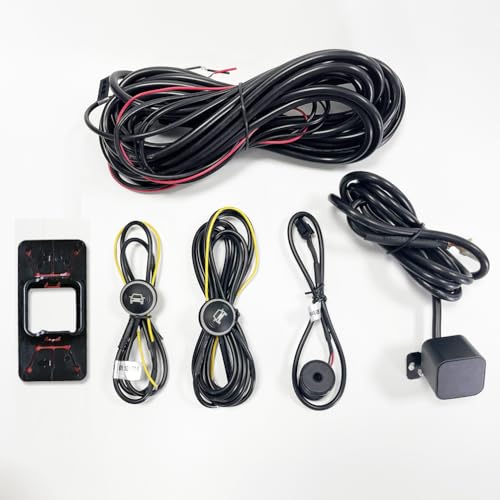
For drivers of cars and trucks who want enhanced safety on the road, a Blind Spot Monitoring System is an essential tool. This system uses 77 GHz millimeter-wave radar sensors to detect vehicles in your blind spots, functioning reliably in any weather condition. When you exceed 10KM/H, it alerts you with LED lights and a buzzer if a vehicle enters the detection zone. It also offers features like Lane Change Assistance and Rear Cross Traffic Alert, helping prevent side collisions and accidents while reversing. With its user-friendly design and solid support, you’ll drive with confidence knowing you’re protected.
Best For: Drivers of cars and trucks seeking enhanced safety and awareness of their surroundings on the road.
Pros:
- Reliable detection in various weather conditions, ensuring safety regardless of the environment.
- Comprehensive alert system with both visual (LED blinking) and audible (buzzer sound) warnings for increased driver awareness.
- User-friendly features such as Lane Change Assistance and Rear Cross Traffic Alert, which help prevent accidents.
Cons:
- Requires installation, which may be challenging for some users without technical expertise.
- Limited detection range for certain functions, which may not cover all blind spot scenarios.
- Average customer rating of 3.8 out of 5 stars, indicating some users may have experienced issues or dissatisfaction.
BY-J Blind Spot Monitoring System (Universal Car Detection System)

Designed for universal compatibility, the BY-J Blind Spot Monitoring System stands out as an excellent choice for drivers of sedans, SUVs, and pickups with plastic bumpers. Utilizing 77 GHz millimeter-wave radar technology, it detects moving objects in your blind spots up to 26*230 ft away, functioning well in various weather conditions. You’ll appreciate its warning mechanisms, featuring LED blinking and buzzer alerts to keep you informed. With six assistance features, including Lane Change Assistance and Rear Cross Traffic Alert, this system considerably reduces the risk of side collisions. Just remember, professional installation is required for peak performance.
Best For: Drivers of sedans, SUVs, and pickups with plastic bumpers seeking enhanced safety through blind spot detection.
Pros:
- Utilizes advanced 77 GHz millimeter-wave radar technology for accurate detection.
- Operates effectively in various weather conditions, including night and fog.
- Offers multiple assistance features to significantly reduce the risk of side collisions.
Cons:
- Requires professional installation for optimal performance.
- Not compatible with vehicles that have metal bumpers due to radar interference.
- May be considered an additional expense for drivers on a budget.
6.25inch Car Side View Blind Area System with Camera Monitor
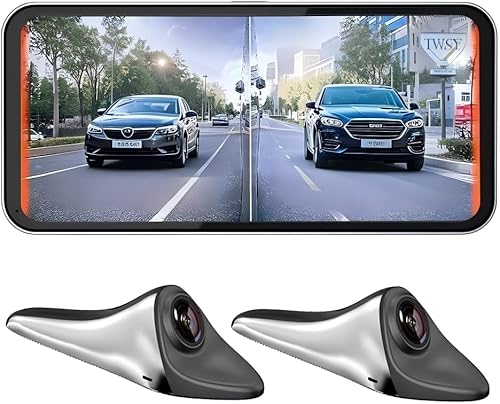
Enjoy enhanced visibility and peace of mind with the 5inch Car Side View Blind Area System featuring a camera monitor. This system offers a sleek LCD display with touch functionality, ensuring you can effortlessly switch between settings. Weighing just 2.3 pounds, its all-aluminum alloy design is both lightweight and stylish, promoting better heat dissipation. With effective driving warnings and pedestrian alerts, it greatly boosts your safety in complex traffic situations. Plus, the magnetic suction fixed bracket makes installation a breeze. Upgrade your driving experience and eliminate blind spots with this reliable monitoring solution tailored for your needs.
Best For: Drivers seeking enhanced visibility and safety while navigating complex traffic environments.
Pros:
- High-definition LCD display with touch functionality for easy navigation and settings adjustment.
- Lightweight and stylish all-aluminum alloy design promotes better heat dissipation and durability.
- Effective warning system for both driving and pedestrian alerts, enhancing overall safety.
Cons:
- Requires installation which may be challenging for some users without technical skills.
- Limited screen size may not provide as much visibility as larger display systems.
- Customer reviews indicate that some users may experience difficulty with the touch screen responsiveness.
BY-J Blind Spot Monitoring System

The BY-J Blind Spot Monitoring System stands out for drivers who prioritize safety and convenience, especially those traversing busy streets or highways. This 24GHz millimeter-wave radar system detects potential collisions in blind spots using high-speed sensors. It activates with your turn signals, alerting you through LED lights and a buzzer when an object is nearby. With a detection range of up to 15 meters, it enhances lane-changing confidence. Installation is recommended by professionals, and it fits most vehicles, excluding those with metal bumpers. Backed by a one-year warranty, this system is a reliable choice for safer driving.
Best For: Drivers who prioritize safety and convenience while navigating busy streets or highways.
Pros:
- Utilizes advanced 24GHz ultrasonic radar for effective blind spot detection.
- Alerts drivers with visual (LED lights) and audio (buzzer) notifications for added safety.
- Compatible with most DC12v vehicles, enhancing lane-changing confidence.
Cons:
- Professional installation is recommended, which may incur additional costs.
- Not compatible with vehicles that have metal bumpers, limiting its applicability.
- Customer reviews indicate mixed experiences, with a rating of only 3.8 out of 5 stars.
MUYACDST 12 Inch Rearview Mirror Camera
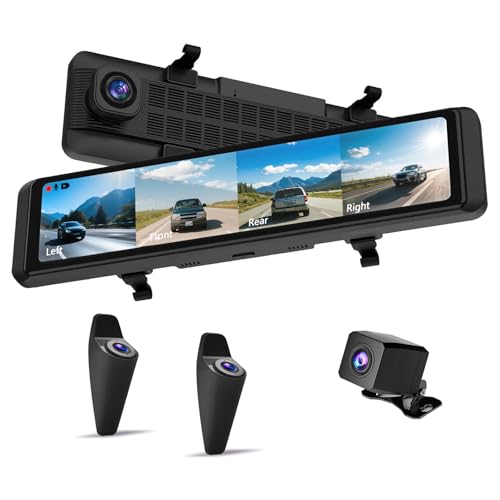
If you’re looking for an extensive solution to enhance your driving safety, the MUYACDST 12 Inch Rearview Mirror Camera stands out with its advanced Blind Spot Detection (BSD) feature. This system combines a 2K front camera with three 1080P cameras, providing a 170° wide-angle view that minimizes blind spots. The vibrant 12-inch IPS touchscreen allows for easy control and multiple display settings. With reverse assist functionality, it automatically switches to the rear view when you shift gears. Plus, the dual 12V power options guarantee seamless installation, giving you peace of mind while driving. Safety has never looked this good!
Best For: Drivers seeking enhanced safety features and visibility while on the road.
Pros:
- 4-channel HD recording provides comprehensive coverage and minimizes blind spots with a wide-angle lens.
- User-friendly 12-inch IPS touchscreen allows for easy navigation and multiple display options.
- Automatic reverse assist functionality simplifies parking and enhances safety during maneuvers.
Cons:
- Installation may require professional assistance for optimal setup.
- The system is incompatible with 24V power supplies, limiting usage in certain vehicles.
- The large screen may obstruct view in some smaller vehicles if not properly mounted.
Riloer BSD Radar Monitoring Detection Kit for Car Blind Spot Detection

For drivers seeking enhanced safety and peace of mind, the Riloer BSD Radar Monitoring Detection Kit stands out as a reliable choice in blind spot detection. This ultrasonic system automatically activates when you start your vehicle, detecting moving objects in your blind spots up to 3.5 meters, with customization options extending to 5 meters. Built with high-quality PVC and metal, it’s sturdy and wear-resistant, ensuring a long service life. When an object enters the detection range, LED lights alert you, effectively reducing the risk of side collisions. With a 30-day return policy, it’s a smart addition to your safety toolkit.
Best For: Drivers seeking enhanced safety features to mitigate the risks associated with blind spots.
Pros:
- Automatic Activation: The system activates automatically when the vehicle starts, providing seamless operation.
- Customizable Detection Range: Users can customize the detection range up to 5 meters, enhancing flexibility based on driving conditions.
- Sturdy Build Quality: Made from high-quality PVC and metal, the kit is wear-resistant and designed for long-term use.
Cons:
- Average Customer Rating: With a rating of 3.2 out of 5 stars, some users may have experienced issues or dissatisfaction.
- Weight: At 1.47 pounds, it may be considered slightly heavier compared to other similar devices.
- Best Sellers Rank: Positioned at #427,995 in Industrial & Scientific may indicate lower popularity compared to competing products.
Car Blind Spot Camera with Display System

Equipped with an advanced camera system, the Car Blind Spot Camera with Display System is perfect for drivers who prioritize safety on the road. This system offers real-time monitoring of your blind spots, providing an intelligent visual display to enhance your awareness. With its dual warning system, you’ll receive both audio and visual alerts for potential hazards during lane changes and turns. Its universal mounting design guarantees quick installation on any vehicle’s exterior mirrors. Plus, the wide-angle camera lens expands your field of view, eliminating dangerous blind spots and delivering a continuous camera feed directly on your dashboard screen.
Best For: Drivers who prioritize safety and seek enhanced awareness of their surroundings while on the road.
Pros:
- Real-time monitoring of blind spots enhances driving safety.
- Dual warning system provides both audio and visual alerts for added security during lane changes.
- Universal mounting design allows for easy installation on any vehicle’s exterior mirrors.
Cons:
- May require professional installation for optimal setup in some vehicles.
- The camera feed may be affected by weather conditions, impairing visibility.
- Initial setup and calibration might take time for some users to adjust.
Blind Detection Intelligent BSD Blind Spots Detection Tool

The Blind Detection Intelligent BSD Blind Spots Detection Tool stands out for its advanced 79GHz radar technology, making it an ideal choice for everyday drivers, especially those new to the road or women seeking added confidence. This system offers real-time alerts for lane changes and crossing traffic, ensuring you stay aware of your surroundings. With precise detection up to 50 meters and double sensor setups, it performs reliably in all weather conditions. Easy to install and compatible with various car models, this tool minimizes false alarms while maximizing your driving safety, thanks to its high brightness LED warning lights.
Best For: Everyday drivers, especially new or female drivers, seeking enhanced confidence and safety on the road.
Pros:
- Advanced 79GHz radar technology ensures precise detection of blind spots up to 50 meters.
- Reliable performance in all weather conditions, including rain and fog, thanks to double sensor setups.
- Easy installation and compatibility with various car models streamline the integration into existing vehicle electronics.
Cons:
- May require professional installation for optimal performance in some vehicle models.
- Higher upfront cost compared to basic blind spot detection systems.
- Limited effectiveness in extreme weather conditions with heavy obstructions or interference.
Factors to Consider When Choosing Blind Spot Monitoring Systems
When choosing a blind spot monitoring system, you’ll want to evaluate several key factors. Think about the detection range, alert mechanisms, and how easy it is to install. Don’t forget to check if the system is compatible with your vehicle and how well it performs in various weather conditions.
Detection Range Specifications
Choosing a blind spot monitoring system involves considering several factors, with detection range specifications being one of the most critical. Detection ranges can vary widely; some systems detect objects from 1 to 32.8 feet, while others reach up to 164 feet. Systems using millimeter-wave radar technology often provide reliable detection in various weather conditions, adding to their effectiveness. Keep in mind that many systems activate only at speeds above 10 km/h to minimize false alerts. The type of objects detected also matters—some systems differentiate between moving and stationary objects. Additionally, sensor installation location and angle can greatly influence detection range, so choose a system that optimizes sensor placement for your vehicle type.
Alert Mechanism Options
Several alert mechanism options are available in blind spot monitoring systems, each designed to enhance your awareness on the road. Most systems use LED lights that activate when a vehicle enters the detection zone, providing a visual alert. You might also encounter systems featuring an auditory alert, like a buzzer, to alert you further when an object is detected, especially during lane changes. Some models offer different alert modes based on your turn signal status, with LED lights either flashing or steady. Advanced systems combine visual and auditory signals for dual alerts, boosting your awareness of potential hazards. Remember, the effectiveness of these alerts can vary depending on detection range, environmental conditions, and your vehicle’s speed.
Installation Complexity Level
Understanding the alert mechanisms is just one part of selecting a blind spot monitoring system; installation complexity is another key factor. Your choice can greatly depend on how easy or difficult the installation process is. Some systems require professional installation due to complex wiring and sensor placement, especially those using radar technology. Precise mounting locations are essential to avoid metal interference, complicating DIY efforts. If your vehicle has a metal bumper, systems designed for plastic bumpers may not work well, impacting installation feasibility. Some systems come with detailed manuals and tools, while others might require specialized equipment. For advanced systems with features like lane change assistance, professional installation is often recommended to guarantee everything functions safely and efficiently.
Vehicle Compatibility Requirements
When selecting a blind spot monitoring system, compatibility with your vehicle is essential. First, make certain the system matches your vehicle’s voltage requirement, typically DC12V, to prevent electrical issues during installation. Next, check if the system can be mounted on your specific bumper type; some systems only work with plastic bumpers and not metal ones. Also, consider the size and dimensions of the sensors or cameras to make sure they fit seamlessly with your vehicle’s design. It’s important to verify the detection range, as some systems may only detect objects within a limited distance. Finally, confirm that the installation process is manageable for your vehicle type, as some models may require professional help for peak performance.
Weather Resistance Features
Choosing a blind spot monitoring system that can withstand various weather conditions is essential for ensuring your safety on the road. Look for systems designed to operate effectively in rain, fog, and snow. Advanced radar technologies, like 24GHz or 77GHz millimeter wave sensors, enhance detection capabilities by penetrating through adverse weather elements. Additionally, weather-resistant features such as IP67-rated housing protect sensors from moisture and dust, prolonging their lifespan. Systems that provide alerts through LED lights and audible warnings are invaluable in low visibility situations, ensuring you receive timely notifications about nearby hazards. A robust monitoring system should maintain functionality in extreme weather, minimizing false alarms while maximizing detection accuracy for moving objects.
Sensor Technology Type
Weather-resistant features are important, but the type of sensor technology used in a blind spot monitoring system can greatly impact its performance. Most systems rely on microwave radar technology, typically operating at 24GHz or 77GHz. This allows them to detect vehicles in your blind spots from as close as 1 foot to over 32.8 feet, depending on the model. Advanced systems often use multiple sensors to enhance coverage, ensuring reliable detection in various weather conditions, including rain and fog. The choice of sensor technology also affects the alert mechanisms—some systems use LED indicators, while others have audible alarms to warn you when another vehicle enters the detection zone. Be mindful of installation requirements, as some might need professional help.
User Interface Design
As you explore options for blind spot monitoring systems, the design of the user interface becomes essential for your driving experience. Look for interfaces that prioritize clarity and intuitiveness, so you can quickly interpret alerts without distraction. Touchscreen systems offer customizable display settings, allowing you to adjust alerts to your liking. Effective user interfaces utilize visual cues like LED indicators and high-definition displays, providing immediate feedback on nearby vehicles. Audio alerts should be distinct yet unobtrusive, capturing your attention without overwhelming you. Additionally, consider systems with integration capabilities, enabling seamless shifts between functionalities and minimizing the need for multiple interfaces. A well-designed user interface enhances both safety and convenience on the road.
Warranty and Support Services
When selecting a blind spot monitoring system, considering warranty and support services can greatly enhance your overall experience. Check for warranty options; many systems come with a one-year warranty or customer support for installation issues. A solid return policy, like a 30-day return guarantee, gives you peace of mind and flexibility if the system doesn’t meet your expectations. Some brands might offer extended warranty options upon request, which can protect your investment over time. Customer service availability is essential—quick assistance during installation and troubleshooting can greatly improve your satisfaction. Finally, read customer reviews to gauge the effectiveness of warranty services and support responsiveness for specific systems. This informed approach helps you make a wise choice.