If you’re looking to elevate your sound quality, you’ve come to the right place. The right audio limiter can make all the difference in achieving a professional sound, whether you’re recording music or fine-tuning a live performance. From the classic Universal Audio 1176 to the innovative dbx 266xs, there’s a range of options available for every need. Let’s explore these top choices and what makes them essential for your audio setup.
Universal Audio 1176 Compressor Limiter Pedal

The Universal Audio 1176 Compressor Limiter Pedal is a game-changer for guitarists seeking authentic vintage compression in a portable format. You’ll love its emulation of the legendary 1176LN Limiting Amplifier, packed into a compact stompbox. With single, dual, and sustain modes, you can easily achieve classic compression effects. Plus, the parallel compression mode lets you blend dry and affected signals effortlessly. The ratio knob even features an “all buttons in” mode for gritty textures. Control settings for input, output, attack, and release mirror the original hardware, while the true/buffered bypass guarantees your tone stays pristine. It’s a must-have for any serious player!
Best For: Guitarists looking for an authentic vintage compression effect in a compact and portable pedal format.
Pros:
- Authentic emulation of the legendary 1176LN Limiting Amplifier.
- Versatile modes including single, dual, sustain, and parallel compression for a variety of effects.
- Control settings that closely mimic the original hardware for precise adjustments.
Cons:
- May be more expensive compared to other compressor pedals on the market.
- The compact design may limit some features found in larger, studio versions.
- Learning curve for those unfamiliar with the original 1176 controls.
rolls Stereo Program Limiter, Black (SL33B)

If you’re looking for a reliable audio limiter that effortlessly balances dynamics in both professional and consumer setups, the Rolls Stereo Program Limiter (SL33B) is an excellent choice. This compact device, made from durable stainless steel, measures just 5 inches on all sides and weighs only 1 pound. It features 1/8 stereo and RCA inputs and outputs, making connectivity a breeze. With its powerful compressor/limiter circuit, it maintains audio levels for comfortable listening while allowing you to fine-tune engagement levels with the threshold control. Rated 3.8 out of 5 stars, it’s a trusted option among audio enthusiasts.
Best For: The Rolls Stereo Program Limiter (SL33B) is best for audio professionals and enthusiasts seeking an effective solution for managing audio dynamics in both studio and consumer environments.
Pros:
- Compact and lightweight design for easy portability and integration into various setups.
- Versatile connectivity options with 1/8 stereo and RCA inputs and outputs, accommodating different audio equipment.
- Powerful compressor/limiter circuit ensures consistent audio levels for a comfortable listening experience.
Cons:
- Moderate customer rating of 3.8 out of 5 stars may indicate varying levels of satisfaction among users.
- Limited information on warranty and support, which may leave customers wanting more assurance.
- No advanced features compared to higher-end limiters, which may not meet the needs of professional audio engineers.
Stetsom STX2448 FLOATING PRO – Professional DSP Digital Signal Processor

For audio enthusiasts seeking unparalleled control over their sound, the Stetsom STX2448 FLOATING PRO stands out as a top choice in 2026. This professional DSP digital signal processor features a 15-band graphic equalizer, remote sequencer, and subharmonic bass options, enhancing your audio experience. With both RCA and high-input options, you can easily integrate it into your system. The floating mode allows for versatile audio stream management, while the input level adjustment helps you avoid saturation with two LED indicators. Plus, the improved user interface guarantees effortless navigation through configurations, making it perfect for anyone wanting pro-level sound quality.
Best For: Audio enthusiasts and professionals looking for advanced sound control and high-quality audio processing.
Pros:
- Enhanced audio quality with a 15-band graphic equalizer for precise sound tuning.
- Versatile input options (RCA & high signal) for easy integration into various audio systems.
- User-friendly interface with improved navigation features for effortless configuration adjustments.
Cons:
- May be complex for beginners unfamiliar with DSP technology.
- Higher price point compared to standard DSPs, which may not fit all budgets.
- Potential overkill for casual listeners who do not require advanced audio features.
dbx 266xs Professional Audio Compressor/Gate

When you need a reliable and versatile audio compressor for live performances or studio sessions, the dbx 266xs Professional Audio Compressor/Gate stands out as an excellent choice. Weighing just 6.6 pounds and occupying a single rack space, it’s perfect for portable use. Its Overeasy compression technology delivers smooth, musical sound while the AutoDynamic controls simplify adjustments. With XLR and 1/4 TRS inputs, you’ll enjoy versatile connectivity. This compressor enhances vocal clarity and tightens complex arrangements, ensuring your mixes shine. Plus, with precision LED displays and backlit switches, monitoring audio levels is a breeze. Experience professional sound quality with the dbx 266xs!
Best For: Musicians, audio engineers, and sound professionals seeking a reliable compressor for both live performances and studio recordings.
Pros:
- Versatile connectivity with quality XLR and 1/4 TRS inputs and outputs.
- Patented Overeasy compression technology provides smooth and musical sound.
- User-friendly AutoDynamic controls make sound adjustments easy and efficient.
Cons:
- Limited to a single rack space, which may not cater to all setups.
- Some users may prefer more advanced features found in higher-end models.
- The weight of 6.6 pounds may be considered heavy for ultra-portable needs.
ART SCL2 Dual/Stereo Compressor/Limiter Expander/Gate, Black (SCL-2)
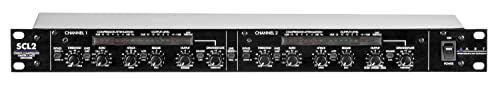
The ART SCL2 Dual/Stereo Compressor/Limiter Expander/Gate is an ideal choice for musicians and audio engineers looking to elevate their sound quality with precision control. Weighing just one pound and measuring 21 x 10 x 3.5 inches, it fits perfectly into your setup. With dual-channel or linked stereo operation, you can achieve balanced sound effortlessly. The adjustable attack and release settings let you customize your dynamics, while the fast solid gate or subtle expander guarantees noise reduction. Plus, the LED meters provide clear gain reduction displays. Enjoy reliable performance backed by a manufacturer’s warranty, making the SCL2 a smart investment.
Best For: Musicians and audio engineers seeking precision control over their sound quality in a compact, dual-channel compressor.
Pros:
- Versatile Operation: Supports dual-channel and linked stereo operation for diverse applications.
- Customizable Dynamics: Adjustable attack and release settings allow for tailored sound manipulation.
- Clear Feedback: LED meters provide precise gain reduction displays for each channel, enhancing monitoring.
Cons:
- Limited Weight Capacity: At just one pound, it may not be as durable as heavier alternatives.
- Power Source Dependency: Requires a corded electric power source, limiting portability.
- Price Competitiveness: May not be the most budget-friendly option compared to similar products.
Taramps Pro 2.4 BT Bluetooth DSP Crossover Digital Signal Processor for Car Audio
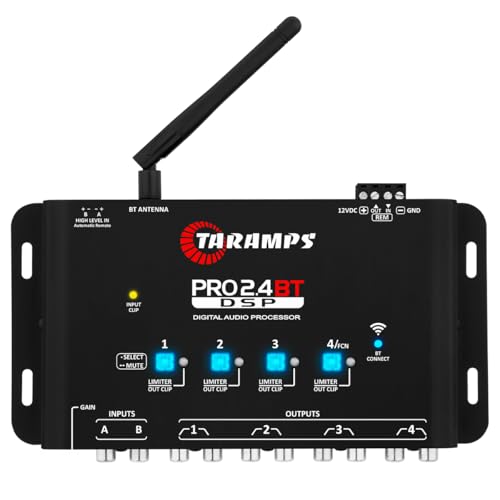
Taramps Pro 2.4 BT Bluetooth DSP Crossover is a game changer for car audio enthusiasts seeking precise sound control and optimization. With its full digital signal processing, you can enjoy a 15-band graphic equalizer, 12 preset EQs, and gain of up to 9V. Wireless configuration via Bluetooth 5.4 BLE allows for seamless adjustments from your smartphone or tablet. Plus, it’s compatible with various audio setups, whether you’re upgrading a daily driver or a wall-of-sound system. Its 24-bit processing guarantees high fidelity, while smart features like the Anti-Puff System enhance your listening experience. You’ll love the control it offers!
Best For: Car audio enthusiasts who want precise sound control and optimization in their audio systems.
Pros:
- Full digital processing with a 15-band graphic equalizer and 12 preset EQs for tailored sound experiences.
- Wireless configuration through Bluetooth 5.4 BLE, allowing easy adjustments from smartphones or tablets.
- Rugged metal housing ensures durability in demanding environments.
Cons:
- May require a learning curve for users unfamiliar with digital signal processors.
- Compatibility with some older car audio systems may be limited.
- The initial setup process can be time-consuming for complex audio systems.
Universal Audio 1176LN Solid State Limiting Amplifier
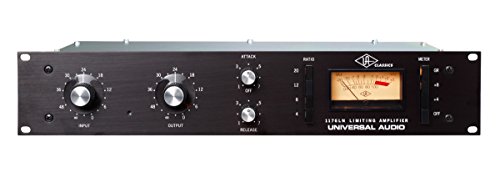
For audio engineers seeking precision and reliability in their recordings, the Universal Audio 1176LN Solid State Limiting Amplifier stands out with its ultrafast attack time of just 20 microseconds. Modeled after the classic blackface revisions, this limiter delivers F.E.T. gain reduction and offers selectable compression ratios of 4:1, 8:1, 12:1, and 20:1. With an adjustable release time from 50 milliseconds to 1.1 seconds, you can tailor your sound perfectly. Each unit is hand-wired and tested, ensuring uncompromising quality. Weighing 13.6 pounds and crafted from stainless steel, it’s a reliable workhorse for any studio setup.
Best For: Audio engineers and recording professionals who require high-quality, precise limiting and compression in their studio setups.
Pros:
- Exceptional ultrafast attack time of 20 microseconds for precise sound control.
- Hand-wired craftsmanship ensures high-quality performance and reliability.
- Versatile selectable compression ratios (4:1, 8:1, 12:1, 20:1) and adjustable release time for tailored audio processing.
Cons:
- Weighs 13.6 pounds, which may be heavy for portable setups.
- Higher price point compared to entry-level limiters may deter budget-conscious buyers.
- Limited availability of warranty information may concern some customers.
Stetsom STX 2848 PRO DSP Crossover & Equalizer

Looking for a powerful audio solution that offers exceptional control over your sound? The Stetsom STX 2848 PRO DSP Crossover & Equalizer delivers precisely that. With its 8-channel full digital signal processor, you can easily manage your audio setup. Featuring a 15-band graphic equalizer, variable crossover options, and dynamic limiter, it lets you fine-tune every detail. The intuitive LCD display, password lock, and sequencer amp remote activation enhance usability. Weighing just 1 pound and compact in size, it’s perfect for any space. Rated 4.5 stars by satisfied customers, this unit is a must-have for audio enthusiasts.
Best For: Audio enthusiasts and professionals seeking precise control and customization of their sound systems.
Pros:
- Versatile audio control with 15-band graphic equalizer and multiple crossover options.
- User-friendly interface featuring an intuitive LCD display and password lock for security.
- Lightweight and compact design makes it easy to install and integrate into various audio setups.
Cons:
- Limited to 8 channels, which may not be sufficient for larger systems.
- Requires some technical knowledge to fully utilize its advanced features.
- Pricing may be a consideration for budget-conscious buyers compared to simpler models.
Behringer Composer Pro-XL MDX2600 Compressor with De-esser

The Behringer Composer Pro-XL MDX2600 Compressor with De-esser stands out as an ideal choice for musicians and audio engineers seeking a versatile tool to enhance their sound quality. This 2-channel compressor features an expander, gate, and peak limiter, ensuring excellent audio control. Its integrated de-esser tackles harsh sibilance, while the dynamic enhancer and tube simulation add warmth to your sound. Weighing just under 5 pounds and measuring 16.65 x 5.16 x 1.5 inches, it’s a compact powerhouse. With a customer rating of 4.4 stars from 130 reviews, it’s a reliable addition to your audio toolkit.
Best For: Musicians and audio engineers looking for a versatile compressor that enhances sound quality and provides effective audio control.
Pros:
- Excellent audio control with features like expander, gate, and peak limiter.
- Integrated de-esser effectively reduces harsh sibilance in recordings.
- Compact design makes it easy to integrate into any audio setup without taking up much space.
Cons:
- May require some technical knowledge to utilize all features effectively.
- Limited maximum power output may not suit all professional environments.
- Warranty information is not readily available, which could concern some users.
Audio Compressor, Professional Dual-Channel Rackmount Vocal Compressor/Limiter

Packed with essential features, the FULODE Audio Compressor stands out as an ideal choice for musicians, sound engineers, and live performers seeking to elevate their audio quality. This professional dual-channel rackmount vocal compressor/limiter offers versatile applications for vocals, guitars, and drums. With adjustable attack and release settings, you can shape your sound precisely. The built-in noise gate and VCA circuit design enhance vocal clarity while reducing ambient noise. Plus, the dedicated sidechain input enables frequency-based ducking for a polished mix. Weighing just 5.29 pounds, it’s perfect for both studio and live setups, delivering reliable performance wherever you need it.
Best For: Musicians, sound engineers, and live performers who want to enhance their audio quality with a reliable vocal compressor/limiter.
Pros:
- Dual-channel design allows for versatile use with various sound sources, including vocals, guitars, and drums.
- Built-in noise gate and VCA circuit improve vocal clarity and reduce ambient noise, resulting in cleaner audio.
- Dedicated sidechain input enables frequency-based ducking, providing detailed dynamic shaping for professional mixes.
Cons:
- Weighs 5.29 pounds, which may be heavier than some portable alternatives.
- Limited to corded electric power source, potentially restricting mobility in certain setups.
- Best sellers rank indicates it’s not the top choice among all available audio compressors, suggesting room for improvement in features or performance.
Factors to Consider When Choosing Audio Limiters
When choosing an audio limiter, you’ll want to reflect on several key factors. Compression ratios, input and output options, and attack and release times all play an essential role in achieving your desired sound. Additionally, don’t overlook build quality and user interface, as these elements can greatly impact your overall experience.
Compression Ratios and Types
Choosing the right audio limiter involves understanding compression ratios and types, as these factors considerably impact your audio quality. Compression ratios determine how much the audio signal is reduced beyond a set threshold, typically shown as a ratio like 4:1 or 8:1. Different types of compression, such as peak limiting and RMS compression, serve distinct purposes; peak limiting keeps signals from exceeding levels, while RMS averages for a smoother dynamic range. Many limiters feature multiple ratio settings, letting you tailor the compression for various sources. Pay attention to attack and release times—attack controls the response to peaks, while release affects how quickly the signal normalizes. Finally, choose between overeasy and hard knee compression for your desired audio evolution.
Input and Output Options
Understanding input and output options is vital for finding the right audio limiter, as these features directly impact compatibility and performance. First, consider the types of input options available, like RCA and XLR, which determine how easily you can connect different audio sources. You’ll want limiters with multiple output options, including balanced and unbalanced outputs, to guarantee smooth integration with your equipment. Additionally, check if the limiter can handle high-level inputs from devices like factory car stereos, enhancing its versatility. Look for stereo or dual-channel capabilities to manage multiple audio signals simultaneously. Finally, adjustable input level controls are essential for maintaining peak signal levels and preventing distortion, making sure you get the best sound quality.
Attack and Release Times
In the world of audio limiters, attack and release times play a crucial role in shaping your sound. Attack time measures how quickly the limiter responds after your audio signal exceeds the threshold. Short attack times, around 10-30 milliseconds, excel at catching transients, making them perfect for instruments like drums. On the other hand, longer attack times, ranging from 100-800 milliseconds, allow more of the initial sound to pass through. Release time determines how quickly the limiter stops reducing gain after the signal drops below the threshold. Fast release times can create a pumping effect, while slower settings guarantee a more natural decay. Balancing these settings is fundamental for achieving clarity and maximizing the perceived loudness of your audio.
Build Quality and Durability
When it comes to audio limiters, build quality and durability greatly impact their performance and lifespan. You’ll want a limiter made from sturdy materials like stainless steel, which signifies reliability. A well-constructed unit can endure the demands of both studio and live settings, guaranteeing it consistently performs over time. Pay attention to the weight; heavier limiters often have more robust internal components that enhance sturdiness. Look for models with protective casings and internal shock mounts to guard against damage from impacts or vibrations during transport. Finally, check user reviews; they provide valuable insights into durability and any potential issues related to build quality that could affect your limiter’s lifespan. Choose wisely to guarantee longevity and dependability.
User Interface and Controls
Choosing an audio limiter with a user-friendly interface and intuitive controls can greatly enhance your workflow, especially during live performances or studio sessions. Look for devices that feature LED meters, providing visual feedback on gain reduction and compression levels, which helps you monitor audio dynamics effectively. Adjustable attack and release controls are essential for tailoring the compressor’s response to different audio sources, ensuring precise sound shaping. Clear labeling of input and output options simplifies connectivity, helping you avoid signal routing errors. Additionally, integrated features like selectable auto/manual attack and release modes offer versatility, accommodating various audio processing needs. Prioritizing these aspects will make your audio limiting experience smoother and more efficient.
Power Requirements and Consumption
Considering power requirements and consumption is essential for guaranteeing your audio limiter functions effectively in any setting. First, check the voltage specifications; many limiters operate between 100 and 240 volts. Next, pay attention to the maximum power consumption, which can range from as low as 2 watts to up to 0.2 horsepower. The form factor also plays a role—rack-mounted units have different needs compared to pedal or tabletop devices. Don’t forget about the power source type; cordless options may seem convenient but often come with performance limitations. Finally, verify the power supply matches your application, especially in live settings where consistent power is vital to avoid interruptions. This careful consideration will enhance your overall audio experience.
Additional Features and Functions
Power requirements and consumption set the stage for your audio limiter’s performance, but additional features and functions can greatly enhance your experience. Look for limiters with adjustable attack and release settings, allowing you to tailor dynamics control to your specific needs. Built-in features like noise gates or expanders can considerably improve audio clarity by cutting out unwanted background noise during recordings or live shows. Visual feedback options, such as LED metering, help you monitor gain reduction and compression levels effectively. Also, consider devices with multiple input and output options, like XLR and TRS, for flexible connectivity. Finally, sidechain inputs can facilitate frequency-based ducking, enhancing your mixing and production techniques. Choose wisely to elevate your sound quality!